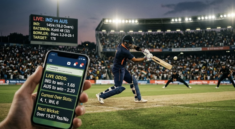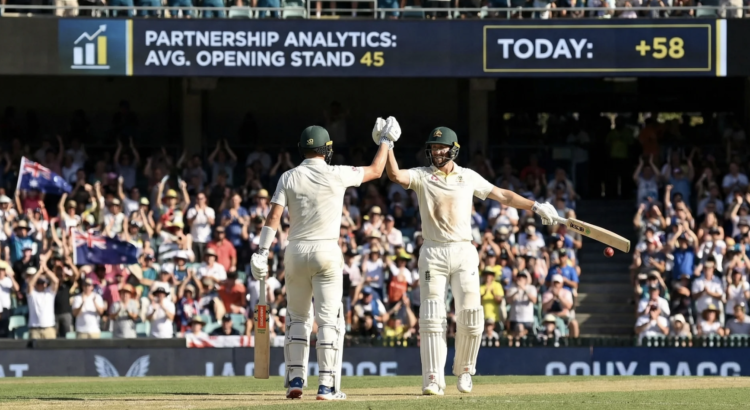
On 10 May 2024 at Narendra Modi Stadium in Ahmedabad, Shubman Gill walked out to open for Gujarat Titans against Chennai Super Kings and did not come back until he had scored 104 off 55 balls alongside B Sai Sudharsan’s 103 off 52 balls — a joint-record 210-run opening partnership in IPL history. The match was effectively over before the middle order batted. Every market that had priced in a normal innings distribution was wrong, and the betting angle that identified two in-form openers on a flat Ahmedabad surface was right. The highest opening stand market is the purest test of pre-match research in cricket betting.
Why Opening Partnerships Shape Match Outcomes
Large partnerships contribute more than just runs to the scoreboard — they can exhaust and demoralise the fielding team. This exhaustion effect is most acute in T20 cricket, where an unbroken 80-run opening stand by over 8 has already used 40% of the available overs and compressed the fielding team’s options dramatically. Captains lose their best bowling options early, the scoring momentum is established, and the psychology of the fielding side shifts from hunt to damage limitation.
In ODIs, the effect is slower but more cumulative. The Gayle–Samuels 372-run second wicket partnership for the West Indies against Zimbabwe in 2015 remains the highest ODI partnership ever — a figure so dominant that Zimbabwe’s scoring became structurally irrelevant from the halfway point of the match. The message for bettors: a massive opening stand doesn’t just win the partnership market. It reshapes every other market in the match simultaneously.
How Highest Opening Stand Betting Works
The highest opening stand market asks which team will produce the larger opening partnership across both innings of a match. In T20s with two innings, this is a direct head-to-head comparison between the two opening pairs. In multi-day cricket, it becomes more complex — up to four innings may be compared.
Market structures offered by bookmakers:
– Which team posts the higher opening stand? (head-to-head between both teams’ openers)
– Highest opening stand Over/Under? (e.g., Over/Under 45.5 for the larger opening stand of the match)
– Exact bracket for highest opening stand (0–20, 21–40, 41–60, 61–80, 80+)
Settlement rules confirmed across major platforms:
– Run-outs count — any dismissal that ends the opening partnership settles the first wicket stand for that innings
– Wides and no-balls are included in the partnership total (they are official runs)
– If an innings ends without a wicket falling, the full innings total is the partnership figure
– For head-to-head markets, both innings must be completed; incomplete innings due to rain are typically voided
Understanding Partnership Betting Markets
The highest opening stand market in a T20 is structurally different from a first wicket partnership market on a single innings. The head-to-head version adds a comparative dimension: you are not just predicting one partnership — you are predicting which opening pair will out-perform the other. This requires analysing both opening pairs simultaneously, their matchups against the opposing bowling attacks, and the likely batting conditions for both innings (which may differ based on toss and pitch progression).
The record context: Quinton de Kock and KL Rahul hold the record for highest opening partnership in IPL history — 210 runs for Lucknow Super Giants against KKR in IPL 2022 — a figure matched but not bettered by Gill and Sudharsan in 2024. This record illustrates the ceiling: 210 runs in 20 overs means an SR of approximately 210 across both openers combined — sustainable only on flat surfaces against an attack without an elite new-ball option.
What Influences Opening Stand Performance
Five variables consistently predict opening stand magnitude across formats:
- Opener form: Both openers must be in form simultaneously. Shubman Gill’s 104 off 55 combined with Sudharsan’s 103 off 52 is only possible when both players are individually executing — one outstanding opener with a struggling partner produces a good individual score but a shorter partnership.
- New ball bowling quality: The opposition’s opening bowling attack is the ceiling constraint. Travis Head and Abhishek Sharma produce high opening stands at SRH because their team faces weak new-ball attacks at home. Against Jasprit Bumrah or Trent Boult — who took 29 first-over wickets in his IPL career (the most in IPL history) — the opening stand ceiling drops structurally.
- Venue and pitch type: Flat surfaces at Narendra Modi Stadium (Ahmedabad), Wankhede (Mumbai), and Chinnaswamy (Bengaluru) produce the highest frequency of 60+ opening stands in IPL cricket. Chepauk (Chennai) and JSCA Ranchi produce the lowest frequency — conditions do the bowling attack’s work.
- Batting approach of the pair: Left-right combinations disrupt bowler rhythm. Head (left) / Abhishek (left) is an exception that works because of shared attacking instinct. Generally, left-right pairs — de Kock (left) / Rahul (right) — sustain longer partnerships because the bowling attack cannot settle into a consistent length.
- Match situation for the chasing innings: A team chasing 165 can bat freely — openers attack, the partnership builds naturally. A team chasing 225 faces more pressure on every delivery — the opening stand ceiling rises if both openers are aggressive, but so does dismissal risk per ball.
Strategies For Predicting Highest Opening Partnerships
Form evaluation for the highest opening stand market requires individual analysis of both openers, not just one. Three data points per opener:
Last 5 innings at similar venues: Venue-specific form is significantly more predictive than overall season form. An opener averaging 8 at Chepauk but 40 elsewhere is a Chepauk liability regardless of season averages. Always pull venue-specific numbers.
Dismissal mode distribution: An opener who is consistently bowled or LBW in the first 5 balls — rather than 15-25 balls in — has a lower partnership floor regardless of their season average. The dismissal mode tells you about their vulnerability to the new ball specifically.
Partnership records together: Confirmed opening partnerships have structural chemistry that individual averages don’t capture. De Kock and Rahul’s 210-run record was not a statistical outlier — it was the peak of a consistently productive partnership across the 2022 IPL season. Track the pair’s last 10 innings together, not just individual form.
Conditions That Favor Long Opening Stands
Three confirmed conditions structurally inflate opening stand totals:
Flat batting surfaces with low seam movement: The Narendra Modi Stadium in Ahmedabad — where Gill and Sudharsan set the record — offers minimal lateral movement to seamers. On surfaces where the ball doesn’t seam or swing, openers face fewer genuine dismissal threats in overs 1-4. The result is more settled opening stands across the innings distribution.
Dew in evening T20 matches: Teams chasing in evening IPL games benefit from dew, which makes the wet ball difficult to grip and control for bowlers. The team batting second in dew-affected conditions sees opening stand ceiling rise by 10-15 runs on average compared to teams batting first — a consistent IPL pattern since the tournament’s early seasons.
Powerplay fielding restrictions: The first 6 overs with only two fielders permitted outside the ring amplify the batting advantage. An aggressive pair facing a weak attack with restricted fielding placements produces the highest scoring phase of any innings. This structural advantage is what produced SRH’s 125/0 powerplay record in IPL 2024 — Head and Abhishek Sharma exploited the fielding restrictions to their maximum.
Mistakes To Avoid In Opening Partnership Bets
- Backing a pair based on one outstanding individual: The GT 210 record required both Gill (104) and Sudharsan (103) to perform simultaneously. The market for “highest opening stand 80+” requires both openers to bat together for a prolonged period. If one opener is in poor form, the other’s brilliance ends in a 30-run partnership when the struggling opener departs. Back the pair, not the individual.
- Ignoring the opposition opening attack: SRH’s record-breaking powerplay scores came primarily in matches where they faced moderate new-ball attacks. The same pairs against Bumrah, Arshdeep Singh, and Pathirana produce dramatically shorter opening stands. The opposition attack’s quality — specifically the best new-ball bowler — is the single strongest constraint on the opening stand ceiling.
- Using record stand data as typical stand data: The IPL record opening stand of 210 by de Kock/Rahul and Gill/Sudharsan represents the 99th percentile of outcomes, not the typical expectation. The typical IPL opening stand is 30-45 runs. Betting “Over 80” in a match without exceptional flattening conditions and confirmed elite opening pairs is betting on a low-frequency outcome.
- Placing highest opening stand bets before toss: The toss decision reveals which team bats first and — crucially — which innings faces which bowling attack. An opening pair may face Bumrah in over 1 (first innings) or an aged ball in overs 30+ (second innings in Tests). This information, available only after the toss, materially changes the opening stand ceiling for each innings.
- Ignoring ODI format specifics: In ODIs, opening partnerships average significantly higher than T20s — 50-80 runs for top-eight pairs. The ODI highest opening stand bracket market requires calibration to these higher norms. A line of “Over 45.5” in an ODI between two batting-heavy teams is structurally easier to hit than the same line in a T20.
Conclusion: Finding Value In Opening Stand Markets
The highest opening stand market rewards very specific pre-match research: confirmed openers, venue conditions, opposition new-ball bowling quality, and pair-specific partnership history. When all four variables align — aggressive pair in form, flat pitch, weak new-ball attack, dew-affected conditions — the Over in the opening stand bracket carries genuine structural value.
The data confirms the ceiling: 210 runs for the highest IPL opening partnership (de Kock/Rahul 2022, Gill/Sudharsan 2024); 125/0 for the highest IPL powerplay stand (Head/Abhishek, SRH 2024). These are the outlier events. Your analytical work is to identify the specific pre-match configuration that makes these outlier events structurally probable — and bet accordingly, at standard unit sizes of 1–1.5%, only when the research supports the position.