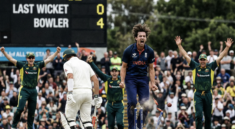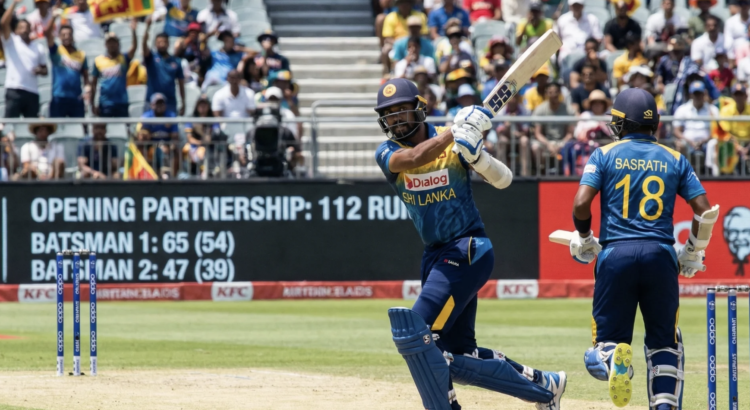
On 9 March 2025, in the Champions Trophy final in Dubai, Rohit Sharma walked out to open the batting against New Zealand in an ICC tournament final — for the fourth time in three years. He scored 76 off 83 balls, shared a 105-run opening partnership with Shubman Gill, and won the Player of the Match award. India won by 4 wickets. It was the most complete expression of what makes Rohit Sharma’s partnership markets so analytically rich: a player who consistently produces defining opening stands in the highest-pressure matches, with a partner who complements rather than duplicates his approach.
For bettors, every Rohit Sharma ODI innings begins with a specific question: will this be a match-defining opening stand, a moderate start, or an early wicket? The opening partnership market forces you to answer that question with data, not instinct.
Rohit Sharma Opening Partnership Betting Markets
The opening partnership prop market for Rohit Sharma exists primarily in ODI cricket — his current active format — and encompasses several distinct bet types:
– First wicket partnership runs Over/Under: The most common form. Bookmaker sets a line (e.g., 44.5 runs), you bet whether Rohit and his partner will exceed or fall short before the first wicket falls
– Century opening partnership Yes/No: Will the opening stand reach 100 runs?
– 50+ opening partnership Yes/No: Will the pair reach 50 before the first wicket?
– Exact bracket: 0–19, 20–39, 40–59, 60–79, 80–99, 100+
– Tournament top opening pair: Which pair will accumulate the most first-wicket partnership runs across a tournament?
Settlement rules confirmed across major platforms:
– The market settles the moment the first wicket falls, regardless of which opener is dismissed
– Extras (wides, no-balls, byes, leg-byes) count toward the partnership total
– If Rohit retires hurt, the partnership is considered ended — the total at the point of retirement is the settled figure on most platforms
– If India bats second and reaches the target without losing a wicket, the first wicket partnership total equals the target score — Over wins automatically
Understanding Opening Stand Betting Props
Opening stand props are fundamentally different from match-winner markets in one critical way: they settle in the first 10–15 overs of the match regardless of what happens afterward. A team can chase 350 successfully or collapse to 180, and the first wicket partnership market settles within the first 30–50 minutes. This time-bounded nature makes opening partnership props the fastest-settling meaningful analytical bet in ODI cricket.
For Rohit Sharma specifically, the prop market carries unusual richness because his career output includes extraordinary peaks alongside significant vulnerability profiles. He holds the ODI world record highest individual score of 264 against Sri Lanka — the only batter ever to hit three ODI double centuries. Yet in his final eight Test matches before retirement, he averaged just 10.93. This range between career-peak and career-trough is wider than almost any other elite opener, making the analysis more precise, not less — because the variables that produce each outcome are clearly identifiable.
Key Factors Behind Rohit Sharma Partnerships
Understanding why Rohit Sharma opening stands succeed or fail requires three analytical layers: the partner, the opposition bowling, and the conditions.
Batting Partner Influence On Opening Stands
Rohit’s partnership with Shubman Gill is the most statistically documented opening pair in current Indian cricket. As of the 2025 Champions Trophy:
– 28 ODI innings together
– 1,943 runs at an average of 71.96
– 6 century opening stands (21.4% of all innings together)
– 18 stands of 50+ (64.3% of all innings together)
Gill explained ahead of a Champions Trophy match: “I think the way we play the game in the powerplay is quite different to each other. Rohit likes to play more aerial shots and try to hit those big sixes. I like to play along the ground.”
This stylistic complementarity is precisely what makes the Rohit-Gill partnership so productive and analytically tractable. Rohit targets the aerial dimension — sixes over the infield, clearing the ropes — while Gill accumulates through the gaps along the ground. Because they attack different dimensions of the field simultaneously, bowlers cannot bowl to one without opening up scoring opportunities for the other.
The 105-run partnership in the Champions Trophy 2025 final against New Zealand illustrates this perfectly. Rohit provided the aerial aggression (7 fours, 3 sixes in his 76) while Gill anchored with precision. Gill’s contribution in ICC tournaments since 2023 has been notable — 1,126 runs with a strike rate of 94.22 and average of 93.83, anchoring while Rohit attacks.
Compare this to the Rohit-Kohli opening combination (now retired from this format): their partnership produced 5,300+ ODI runs together across all positions — but as a pure opening pair, the dynamic was different. Kohli as a traditional No. 3 would come in after an early Rohit dismissal and rebuild, rather than sharing the powerplay with him. The Gill partnership is structurally superior for opening partnership prop betting because both players are in optimal position from ball one.
The historical Rohit-Shikhar Dhawan pairing produced India’s most dominant ODI opening combination for nearly a decade. They shared 18 ODI century stands and accumulated partnership runs at a rate that kept India competitive in every tournament from 2013 to 2019. Rohit started opening the Indian innings with Dhawan in the 2013 ICC Champions Trophy and the pair soon became India’s second most successful opening partnership, after Sourav Ganguly and Sachin Tendulkar.
For opening partnership prop markets, the partner matters more than the opposition in most conditions. A Rohit-Gill combination at their 2024-2025 form levels carries a structurally different probability distribution than any alternative India opening pair — the bookmaker’s line for a Rohit-Gill stand should be calibrated to 65+ runs average, not 50.
Opposition Bowling Strength Analysis
The opposition’s new-ball bowling configuration is the second most important variable for Rohit’s opening partnership props. Three categories:
1. Elite swinging/seaming pace opening attack: Trent Boult (has taken most first-over wickets in IPL history — 29 career first-over IPL wickets), Mitchell Starc, Josh Hazlewood. Against these bowlers under swinging or seaming conditions, Rohit’s dismissal probability in the first five overs increases significantly. His aggressive intent from ball one — the hallmark that makes him great — also makes him vulnerable to the outside edge when conditions assist the bowler. Opposition teams with this profile warrant Under consideration on Rohit’s partnership market.
2. Quality pace without swing: Kagiso Rabada, Shaheen Shah Afridi on flat surfaces. Quality but without early movement. Rohit’s ability to attack from ball one on flat surfaces against pure pace — using his height and reach to hit through the line — historically produces partnerships in the 40–80 run range. The middle bracket.
3. Spin-heavy or medium-pace new ball: When the opposition opens with spin (Afghanistan’s approach) or medium-pace on flat subcontinental surfaces, Rohit historically produces his most explosive partnerships. His flat-pitch powerplay average is significantly higher than his all-conditions average because he can use his feet against spin from the start and attack length deliveries without the risk of the outside edge against swing. The Champions Trophy 2025 Bangladesh match (partnership of 69 kills the chase in the powerplay at 59 balls) occurred in Dubai — flat, dry conditions, no swing, no seam.
Rohit Sharma Opening Partnership Betting Strategies
Predicting Big Opening Stands:
A 100+ opening partnership requires a convergence of four conditions: both openers in form, flat pitch, no early swing or seam, and no early dismissal (dismissals in overs 1-3 truncate the partnership before it can accumulate). The Rohit-Gill combination in 2024-2025 met all four conditions in approximately 6 of their 28 innings together — a 21.4% rate.
For bookmakers, a 100+ partnership line at Yes/No odds of approximately 3.50–4.00 (25–29% implied probability) aligns with the historical base rate. But this base rate rises significantly when:
– The venue’s average powerplay score is 55+ (Wankhede, Chinnaswamy, Eden Gardens)
– The opposition opens with medium-pace on a flat surface
– Both Rohit and Gill have scored 40+ in the previous match
– India is batting first with a big-total intent rather than chasing conservatively
When all four conditions are met simultaneously, the 100+ partnership probability rises to approximately 30–35% — above the implied probability of 3.50 odds (28.6%). This creates a positive expected value position on the Yes bet.
Situations Favoring Short Partnerships
Short partnerships (under 20 runs) have a specific occurrence pattern for Rohit Sharma. His career includes notable early-innings vulnerability profiles that bettors should track:
Overhead conditions with movement: Rohit’s dismissal pattern in swinging conditions shows a higher-than-average outside-edge rate in the first three overs. His trigger movement (across the stumps) creates a gap between bat and ball that swinging deliveries exploit. When the forecast shows overcast skies at venues where swing is common (Headingley, Lord’s, Hamilton), the Under on short lines (sub-30) carries structural support.
Left-arm pace with late movement: Left-arm seamers delivering from around the wicket create a specific angle to Rohit’s stumps that his setup doesn’t naturally cover. This angle (ball moving away from a right-hander from the left-arm angle) has dismissed him repeatedly across formats. Against attacks featuring quality left-arm pace as the new-ball option, Under on the Rohit partnership props is structurally supported.
High-pressure chase targets: Rohit’s aggressive intent from ball one increases his dismissal probability, but this risk is accepted because his strike rate is so high. In low-target chases (under 200), India can afford to lose an early wicket because the match context doesn’t demand a big opening stand. The bookmaker’s opening partnership line for a low-target chase should be shorter than their line for a high-first-innings setup — and bettors who identify overpriced Under lines in these contexts have a precise opportunity.
Best Matches For Rohit Sharma Partnership Bets
The three match types that produce the highest Rohit Sharma opening partnership totals:
1. Subcontinental flat tracks — Day matches: India’s home venues in Wankhede, Chinnaswamy, and Eden Gardens produce the highest batting averages in Indian ODI cricket. Day matches on these surfaces — no dew, no swing — are the optimal conditions for large Rohit opening stands. Rohit’s ODI average at these venues significantly exceeds his global average. Partnership lines below 45 runs at these venues against average-quality bowling attacks are structurally underpriced.
2. ICC tournament knockout matches: The data on Rohit at ICC tournaments since 2023 is extraordinary. Since 2023, Rohit has a batting rating of 60.93 according to ESPNcricinfo’s Smart Stats, the highest for any player with over 1,000 runs in this period in completed ODIs. He has scored at least 50 batting rating points in 55.56% of his innings in this period — the highest among 72 players who have batted at least 20 times. ICC tournament knockout matches are the best individual matches for Rohit opening partnership props because his performance frequency is measurably higher.
3. Home matches against associate or lower-ranked teams: Rohit’s opening partnership average against teams ranked outside the top 5 in ICC ODI rankings is significantly higher than against elite opposition. This creates a specific value window: when India plays a weakly-ranked team at home, the opening partnership line may be set conservatively because it is an India home match where bookmakers assume shorter odds. The analytical case for the Over is strongest in precisely these matches.
Common Pitfalls In Rohit Sharma Partnership Bets
Using career averages without venue adjustment: Rohit’s career ODI average and partnership averages include matches at all venues globally — some of which (Headingley, Newlands, Barbados Oval) are structurally less batting-friendly than his home venues. A global career average of 48–50 masks a venue-specific distribution where he averages 60+ at home and significantly less in England or South Africa. Always use venue-specific data, not global career averages, for opening partnership props.
Ignoring Rohit’s retirement from Tests: Since retiring from Test cricket on 7 May 2025 ahead of India’s England tour, Rohit’s match schedule has been ODI-exclusive. This means his fitness, timing, and match rhythm are now entirely ODI-focused — no Test matches to disrupt his white-ball preparation. For opening partnership props in ODIs, this is a positive indicator: a fresher, more specifically calibrated Rohit Sharma.
Treating Rohit-Gill as a T20 partnership: Although Rohit and Gill open in both T20Is (they used to) and ODIs, the partnership dynamics are completely different across formats. In T20Is, both players hit from ball one with maximum aggression — higher ceiling, higher variance. In ODIs, Gill specifically plays more conservatively in the early overs, allowing Rohit to take aerial risks while Gill accumulates along the ground. The 71.96 average as an opening pair applies to ODIs. Do not transpose it to T20 partnership prop markets.
Overvaluing recent match form without considering bowling quality: Rohit’s recent form matters, but so does the specific bowling attack’s quality and style. A 70-run Rohit opening stand in the previous match against Bangladesh medium-pace bowling does not make an Over in the next match against Boult and Southee’s left-arm swing a high-confidence bet. The bowling match-up is independent of recent batting form. Always assess both sides simultaneously.
Betting the market before confirmed XIs: India’s ODI squad depth means Rohit’s exact opening partner is not always certain until the XI is confirmed 30 minutes before play. If Gill is rested for a non-critical series match, the replacement opener produces a completely different partnership profile. Wait for confirmed XIs before finalising any Rohit opening partnership prop bet.
Conclusion: Finding Value In Rohit Sharma Partnership Markets
Rohit Sharma’s opening partnership props reward a four-step analytical process that can be applied to every India ODI match:
- Confirm the partner. The Rohit-Gill combination has a 71.96 partnership average, 6 century stands in 28 innings. Any other pairing carries a lower baseline and requires separate analysis.
- Assess the bowling attack. New-ball swing or seam → Under pressure. Flat surface, no movement → Over pressure. Left-arm pace around the wicket → Under consideration regardless of conditions.
- Apply the venue modifier. Home flat tracks in Wankhede, Chinnaswamy, Eden Gardens → raise the expected partnership total by 15–20%. English or South African conditions → lower by 15–20%.
- Contextualise the match type. ICC knockout? Rohit’s performance frequency is 55% at elite rating points. Low-target chase? Opening stand importance is reduced. These contextual modifiers apply final calibration before placing the bet.
The 105-run partnership in the 2025 Champions Trophy final — Rohit’s highest individual partnership total in a major ICC final — was the culmination of a 2024-2025 campaign that confirmed his status as the most productive opening batter in ICC tournament conditions. At 37 years old, with Test cricket behind him and ODI cricket his sole remaining format, every Rohit Sharma opening partnership in 2025-2026 carries the full analytical weight of a career that has set records at every level of the game.
The opening partnership market is where that career most directly intersects with betting opportunity.