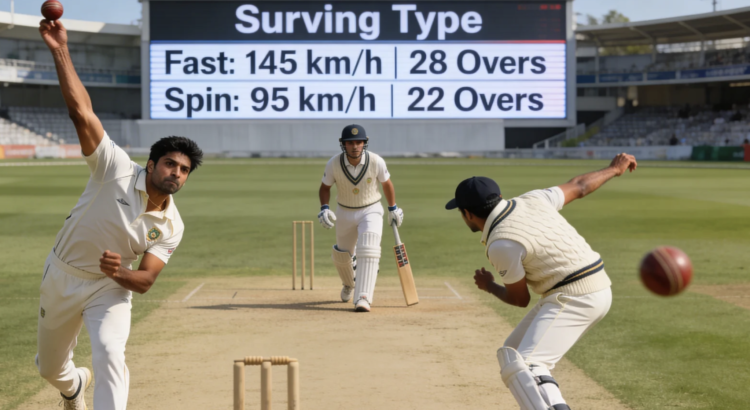
In 2024, Test cricket produced its best ever pace bowling strike rate — fast bowlers took a wicket every 44.9 balls, the first time in a calendar year that pace bowlers needed fewer than 50 deliveries per wicket. In the same year, spinners took 689 wickets — the most in any calendar year in Test history — averaging 31.63. Two records simultaneously broken, one for pace and one for spin. The data confirms what experienced bettors already know: the bowler type that dominates a specific match is not a matter of preference — it is determined by pitch, conditions, batting lineup, and surface behaviour. Understanding that determination before placing a bet is the core skill in bowler matchup markets.
Why Bowler Type Matters In Cricket Betting
Bowler type determines which individual bowling markets carry value in a specific match. A spinner’s wickets Over/Under bet at Headingley under overcast skies is structurally different from the same bet at Chepauk on day three. The surface amplifies one type of bowling and suppresses the other — and bookmakers who set lines based on career averages without sufficient venue and condition adjustments create exploitable gaps.
The India vs England series of early 2024 is the benchmark example. Ravichandran Ashwin picked up 32 wickets at 14.71 with three five-wicket hauls, and Axar Patel finished with 27 wickets at an average of 10.59 including four five-wicket hauls — performances that reflected the spin-dominant surface preparation for that series. Any bowler matchup bet that correctly identified the surface type and backed spinners over pace in those conditions produced significant returns.
Key Factors In Spin Vs Pace Matchups
Four variables determine which bowler type will dominate in a specific match:
– Pitch surface — dry, dusty, turning tracks favour spin; moist, grassy, seaming surfaces favour pace
– Overhead conditions — overcast skies assist swing and seam for pace bowlers
– Match day/session — pitches deteriorate over time, typically favouring spin increasingly from day three in Tests
– Batting lineup composition — right-hand heavy or left-hand heavy lineups affect which bowler type is more threatening
Pitch Conditions Favoring Spin Bowlers
Subcontinental pitches in India, Pakistan, Sri Lanka, and Bangladesh have historically produced higher spin wicket percentages than any other region. From 2000 to 2015, the cost of a wicket was 34.1 runs, which has fallen to 30.16 since then — the drop is drastic after 2016, first due to the “pace pandemic” of spicy, fast-bowling-friendly conditions across the world, and after 2019 due to teams creating bowler-friendly surfaces.
The modern Indian spin-dominant pitch profile was refined after 2020. In the 2023 Australia vs India series, Australia managed 24% balls bouncing abnormally and 25% high-turning balls, with 64% and 58% of their spin deliveries close to the stumps, creating the perfect storm.
For betting purposes, spin bowler wicket props at these venues carry structural Over support when:
– The pitch is described as “dry,” “dusty,” or “showing cracks” in the pre-match report
– The match is beyond day two (pitch deterioration amplifies spin)
– The opposition batting lineup is right-hand heavy (attacking left-arm spin from the rough)
– The home team’s specialist spinner has a documented home-track record (Ashwin, Jadeja, Noman Ali)
Ravindra Jadeja’s profile is the purest expression of spin-surface dominance: since his debut in 2012, he has taken 330 wickets at an average of 25.21, with a best innings return of 7/42. Jadeja’s left-arm spin is economical at 2.58 runs per over — the lowest economy of any active front-line Test spinner globally. Any Jadeja wicket prop at his home venues (Rajkot, Chepauk, Ahmedabad) in dry, turning conditions is priced conservatively relative to his historical performance frequency.
Fast Bowling Advantages On Certain Surfaces
The pitches in England, Australia, South Africa, and New Zealand have traditionally been more hospitable to pacers. The seam movement, bounce, and overhead conditions at these venues produce batting averages against pace that are significantly lower than on flat subcontinental tracks.
In 2024, 18 fast bowlers took 25 or more Test wickets, of which 15 averaged under 30. Five fast bowlers took 25 or more wickets at under 20 — Josh Hazlewood, Jasprit Bumrah, Matt Henry, Brydon Carse, and Kagiso Rabada. This elite pace cohort is most effective in their home conditions — pace props for these bowlers at their home venues are analytically the strongest individual bowling bets available.
The Border-Gavaskar Trophy 2024-25 is the definitive case study. Jasprit Bumrah emerged as the top wicket-taker with 32 wickets across 5 matches, and was given the Player of the Series award. On Australian seaming pitches, Bumrah’s pace, seam, and movement produced wickets at a rate far above his career average — confirming that the match-up between an elite pace bowler and a pace-responsive surface is the highest-value individual bowling bet in cricket.
Spin Vs Pace Betting Strategies
The most analytically useful spin vs pace framework uses surface type to predict wicket distribution between bowling types:
| Surface | Expected spin % of wickets | Expected pace % |
| Turning subcontinental (India/SL/PAK) | 55–70% | 30–45% |
| Fast/bouncy Australian | 20–30% | 70–80% |
| Seaming English | 15–25% | 75–85% |
| South African (Wanderers/Newlands) | 10–20% | 80–90% |
| Flat batting surface (UAE, etc.) | 40–50% | 50–60% |
Using this framework: when backing a specific bowler’s wicket prop, identify which column their bowling type falls into, and compare the implied probability in that column to the bookmaker’s pre-match odds. A spinner in the 55–70% column being offered at sub-par odds carries analytical support. A pace bowler in the 70–80% column being offered at conservative odds is structurally underpriced.
Batting Lineups Against Spin Or Pace
The batting lineup composition amplifies or reduces the bowler type advantage. Three structural patterns:
Right-hand dominant lineup vs left-arm spin on turning pitch: Left-arm orthodox spin (Jadeja, Axar Patel, Jack Leach) angling into the right-hander’s stumps from the rough creates a specific wicket pattern — LBW and bowled from the straighter ball disguised as the turning delivery. England’s right-hand heavy lineup against Jadeja and Axar in the 2024 India series produced exactly this outcome: for England the top wicket-taker of the series was left-arm orthodox Jack Leach with 18 wickets at 28.72 — even England’s best spinner was a left-arm bowler, confirming the left-arm spin advantage against right-hand batting on turning subcontinental surfaces.
Left-hand heavy lineup vs right-arm off-spin: Ashwin’s record against left-handers is among the best of any off-spinner in Test history — the angle created by off-spin into a left-hander’s body increases LBW probability significantly. With 537 wickets at an average of 24.00 and a strike rate of 50.73, Ashwin combined guile, intelligence, and the ability to adapt to different conditions. Any touring team with multiple left-handers facing Ashwin on a turning Indian pitch represented a structurally elevated wicket prop.
Lower-order pace vulnerability: On seaming surfaces, lower-order batters (positions 8–11) are significantly more vulnerable to pace than to spin. When a pace bowler enters the death overs of a Test innings on a seaming track, their wicket probability per ball is highest against tail-enders who lack the technical defence to handle movement. Backing pace bowler wicket props in the late overs of an innings on seaming surfaces is the most consistent late-innings wicket betting strategy.
Best Matches For Bowler Matchup Bets
Highest value spin matchup conditions:
– India home Tests (Chepauk, Ahmedabad, Nagpur) from day two onward
– Pakistan home Tests featuring Noman Ali as primary spinner against right-hand heavy touring lineups
– Sri Lanka home Tests (Galle, SSC Colombo) where Prabath Jayasuriya’s left-arm spin exploits the pitch from day one
Highest value pace matchup conditions:
– Pat Cummins’ 25 wickets in 5 matches speaks for itself in the BGT 2024-25 series. Australian home conditions at Perth Stadium, Gabba, and MCG — bouncy, consistent, pace-amplifying
– Jasprit Bumrah on any seaming or bouncy surface globally: 71 wickets at 14.92, with a strike rate of 30.1 in 2024 — in four of the five series he played in the year, he averaged under 17. His wicket props in non-subcontinental conditions consistently exceed their implied probability
– Kagiso Rabada at Wanderers (Johannesburg) and Newlands (Cape Town) — South Africa’s pace venues produce his highest frequency individual performances
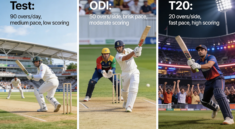
T20 and ODI applications: In T20 cricket, the spin vs pace dynamic is compressed into the powerplay (pace dominant) and middle overs (spin dominant). In IPL 2025, teams with quality spinners in the middle overs — overs 7–15 — systematically produced lower opposition run-rates than teams that relied exclusively on pace in those phases. Backing the top bowler market for quality T20 spinners when the matchup (overs 7–15, batting-friendly flat pitch, right-hand heavy batting lineup) aligns with their strongest performance window is a consistently supportable position.
Conclusion: Using Matchups To Improve Cricket Bets
The spin vs pace matchup framework produces consistent betting value in individual bowler markets when applied with three inputs: surface type (the primary variable), batting lineup composition (the secondary variable), and match stage (day/session in Tests, over range in T20/ODI). Every individual bowler prop bet should be preceded by this three-step assessment.
In 2024, the spin strike rate of 54.2 was better than the previous year’s 58.2, while fast bowlers struck every 44.9 balls — both record-setting figures in a single calendar year. Both bowling types simultaneously produced their best-ever wicket-taking efficiency — which confirms that the question is not which type is better, but which type is better in these specific conditions against this specific batting lineup at this specific venue.
The bettor who answers that question correctly before placing any bowler prop bet has a measurable analytical edge over the bookmaker’s default career-average-based line. Apply it consistently, with standard unit sizing, and the cumulative return from bowler matchup markets reflects the quality of the pre-match analytical work.