Cricket betting has more moving parts than almost any other sport. A match can span five days, be interrupted by rain, produce a tie, get abandoned due to crowd trouble, or have a player retire hurt mid-innings — each scenario triggers specific settlement rules that directly affect your bet. Understanding these rules is not optional. It is the foundation of responsible, informed cricket betting.
Basic Structure Of A Cricket Match
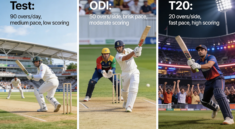
Cricket is played across three formats, each with distinct structures that betting markets and rules are built around:
Test Cricket — Up to 5 days, each team bats twice (two innings). No overs limit. A match can end in a win, loss, or draw. The draw is a legitimate third outcome — bookmakers must offer it as a separate market option.
ODI (One Day International) — 50 overs per team, one innings each. Completed in one day. No draws — a winner is determined by runs, or by the DLS method in rain-affected matches.
T20 — 20 overs per team, one innings each. Completed in approximately 3 hours. The fastest, most bet-on format. No draws in T20 — either team wins, or a Super Over is played in knockout situations.
How Runs, Wickets, And Outcomes Are Determined
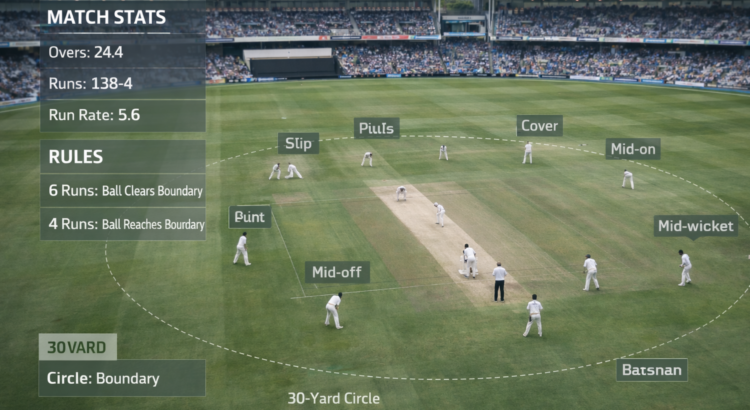
Runs are scored when batsmen run between wickets or hit the ball to the boundary (4 runs for a grounded boundary, 6 runs for a ball clearing the rope). Extras — wides, no-balls, byes and leg-byes — are added to the batting team’s total but are not counted in individual batsman scores for betting settlement purposes.
Wickets fall when a batsman is dismissed by being bowled, caught, LBW, run out, stumped, hit wicket, obstructing the field, or handling the ball. A batsman who retires hurt is not counted as a wicket taken for bowler market settlement — this is a confirmed rule across all major bookmakers.
Match outcomes: In limited overs cricket, the team scoring more runs wins. In Tests, a team wins by dismissing the opposition for fewer total runs across both innings. A draw occurs when the match ends with the result undecided (usually due to time running out).
Main Cricket Betting Markets For Beginners
| Market | Settlement | Key rule |
| Match Winner | Official match result | Draw must be priced if applicable (Tests) |
| Top Team Batsman | Most runs in the match for that team | Dead heat rules if scores are equal |
| Top Wicket Taker | Most wickets in the match | Bowler must be in starting XI |
| Total Runs (O/U) | Official runs scored | Voided if min. overs not completed |
| Total Sixes/Fours | Off-bat boundaries only | Overthrows do not count |
| Series Winner | Official series result | Void if series format changes |
| Tournament Winner | Team lifting the trophy | Non-runners voided per operator policy |
All bets are settled using official ICC data and results. Bookmakers do not create their own results — every settlement is based on what the ICC officially records.
Understanding Over And Session Betting
Over betting allows you to bet on what happens in a specific over — total runs scored, whether a wicket falls, how many boundaries are hit. Key confirmed rules:
– The over must be completed unless the match ends during that over — if the match ends mid-over, most bookmakers settle on runs already scored in that partial over
– Wides and no-balls are included in over run totals
– Only sixes and fours off the bat count for boundary markets — overthrows do not count toward sixes/fours totals
Session betting applies primarily to Test cricket — morning (before lunch), afternoon (lunch to tea), and evening (tea to close of play) sessions. Session runs markets are settled on the aggregate of both teams’ runs if both bat in that session. All bets relating to a Test innings will be void if fewer than 50 overs are completed due to external factors like bad weather, unless the innings has reached its natural conclusion.
Player Performance Markets Explained
Top Batsman rules (confirmed across major platforms):
– Where at least one run has been scored from the bat, top batsman markets would be settled. Bets on any player confirmed as not in the starting XI prior to the beginning of the match would be voided. Players selected in the starting XI that do not bat will be settled as a loser.
– Dead heat rules apply if two players finish with equal runs
– A batsman who retires hurt has their score graded as action at the end of the current innings or on return — not counted as a dismissal for wicket markets
Top Bowler/Wicket Taker rules:
– Where at least one wicket has been taken, top wicket taker markets would be settled. Bets on any player confirmed as not in the starting XI prior to the beginning of the match would be voided. Players selected in the starting XI that do not bowl will be settled as a loser.
– In the event of two or more players ending on an equal number of wickets, the bowler with the least number of runs conceded will be deemed the winner. Dead-heat rules apply.
Player of the Match: Settled on the officially declared man of the match by the competition authority. Dead heat rules apply in the rare event of a joint award.
Special Match Situations That Affect Bets
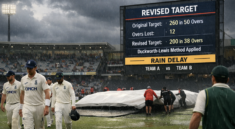
Rain and weather interruption: If a cricket match is cancelled or finished with no result, most bookmakers will void the bet or refund the stake. If the DLS method is used and a winner is declared, then original bets will be valid.
Minimum overs requirements (industry standard):
– T20 matches: Full 20 overs for each team must be scheduled, and there must be an official result (DLS counts) otherwise all bets are void.
– ODI matches: At least 45–50 overs per team depending on the operator
– T20 Over/Under bets: Void if the number of overs is reduced by 3 or more from that scheduled when the bets were struck, unless settlement is already determined.
Abandoned matches: When a bet is voided, you neither win nor lose the wager, and in most cases the stake is refunded. The bookmaker will send you an email or in-app alert to confirm the refund.
Tied Test Match: In the event of a tied Test match where all innings have been completed and both teams have the same score, all bets on the game will be voided.
Venue change: If a match venue is changed, bets already placed will stand providing the home team is still designated as such. If the home and away team for a listed match are reversed, bets placed based on the original listing will be void.
Super Over: Any runs or wickets gained in a Super Over do not count for regular match settlement purposes in most markets.
Live Cricket Betting Basics
Live betting follows the same settlement rules as pre-match betting — official ICC data governs all outcomes. The key additional rules for in-play markets:
– Next batter out market: A bet is void if the player retires injured, or the batter is still at the crease at the end of the match.
– Wicket in over market: Any wicket taken during the current over results in settlement — the over does not need to be completed for a wicket market to settle
– End of over score: Wides and no-balls are included in the official over score for settlement
– Live odds suspension: Bookmakers suspend live markets during wickets, boundaries, and reviews — this is standard practice, not an error
Key Terms
| Term | Definition |
| Void bet | Bet cancelled; stake returned in full |
| Dead heat | Two players/teams tied; winnings divided by number of tied participants |
| No result | Match abandoned without an official winner; most pre-match bets voided |
| DLS | Duckworth-Lewis-Stern method; adjusts targets in rain-affected matches; bets remain valid if a DLS result is declared |
| Implied probability | The win chance embedded in the odds: 1 ÷ Decimal Odds × 100 |
| Extras | Wides, no-balls, byes, leg-byes — count in team totals but not individual batsman scores |
| Retire hurt | Batsman leaves injured; not counted as a wicket for bowler markets |
| Starting XI | The confirmed playing eleven — bets on players not in the XI are automatically voided |
| Accumulator | Multiple selections combined; voided selections are removed, and odds are recalculated accordingly. |
| Over | Six legal deliveries bowled by one bowler; the fundamental structural unit of limited-overs cricket |
Smart Starting Strategy
Three foundational habits that protect beginners from the most common rule-related errors:
- Always confirm the starting XI before placing player markets. Bets on players not in the starting XI are voided across all bookmakers — but this means you lose the opportunity cost of having tied up your stake. Check the confirmed XI 60 minutes before toss. In IPL 2026, teams publish their XI on official social media channels and on the IPL app.
- Read your bookmaker’s rain policy before placing total runs bets. Not every operator handles partial-over reductions the same way. The difference between a bet being settled on reduced overs versus being voided entirely is determined by your specific bookmaker’s T&Cs — not a universal rule.
- Understand dead heat before placing multi-player markets. The top batsman market is the highest dead-heat-risk market in cricket because two openers from the same team often finish close in runs. If you back an opener at 3.00 and they tie with a teammate, your effective payout is 1.50 — not 3.00. Factor this into your expected value calculation before placing.