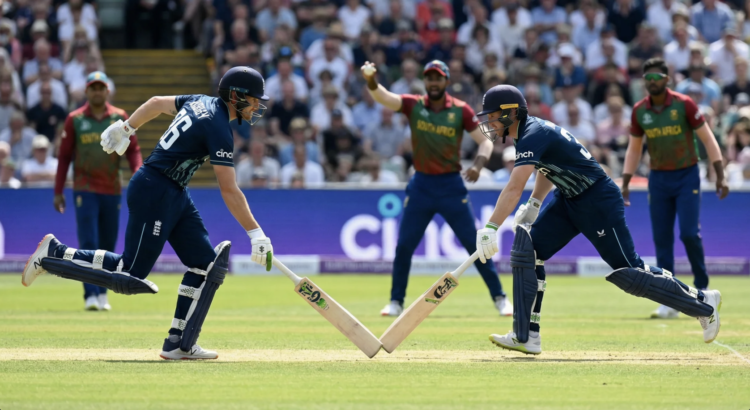
An opening stand of 125 in a T20 match is not just a batting highlight — it is a match-defining event that reshapes every market simultaneously. The total runs Over/Under lengthens, the match-winner odds compress toward the batting team, and the live first wicket partnership market itself settles with payouts already confirmed. The opening partnership market is one of the most precise, most information-rich individual betting markets in cricket — and one of the most underutilised by recreational bettors. Here is how to analyse it correctly.
How Opening Partnerships Influence Cricket Betting Markets
Long partnerships pile more pressure on the opposition since batters from both ends take turns to score runs, forcing the fielding team to change its strategy repeatedly. This multi-directional pressure effect has a direct live market implication: every over the opening pair survives, the match-winner odds shift incrementally. After 10 overs of an unbroken T20 opening stand at 70+, the batting team’s win probability has already exceeded 70%.
From a purely market perspective, the first wicket partnership settlement is isolated from the rest of the innings. A team can score 220 and win convincingly, but if their opening pair falls for 12, the Under in the first wicket partnership market wins regardless. This independence from the match result is what makes the market analytically distinct — and valuable. You are not predicting who wins. You are predicting one specific phase of the game.
Understanding First Wicket Partnership Runs Betting
The first wicket partnership runs market is an Over/Under bet on how many runs the opening pair will accumulate before the first wicket falls.
Example: Bookmaker sets SRH First Wicket Partnership: Over/Under 44.5
– Bet Over 44.5 → The opening pair must score 45+ runs before the first wicket falls
– Bet Under 44.5 → The first wicket must fall with 44 or fewer runs on the board
Settlement rules confirmed across major platforms:
– The market settles the moment the first wicket falls — all runs scored up to that dismissal count
– Extras (wides, no-balls, byes, leg-byes) count toward partnership runs — they are official partnership runs
– If the first wicket falls on the very first ball (0 runs), the Under wins regardless of how small the line is
– If the innings ends without a wicket falling (full innings unbroken), the partnership total equals the full innings score — Over wins automatically
Why Bookmakers Offer Opening Stand Markets
Opening partnership markets exist because the opening phase has the highest information value per ball of any phase in limited-overs cricket. The bookmaker can set a precise line using pre-match data — confirmed openers, venue averages, bowling attack, pitch type — without the compounding variables that affect late-innings markets. The market is self-contained: one wicket settles it.
For bettors, this creates a specific analytical advantage. Unlike match-winner markets where five days of variables affect Test outcomes, the first wicket partnership in a T20 settles within 6 overs in most cases. The information required — who opens, what the pitch does to new-ball bowlers, what the powerplay bowling attack looks like — is all knowable before the first ball.
Key Factors That Affect Partnership Run Totals
- Confirmed openers: Opening position is the single most impactful variable. Travis Head (SRH) and Abhishek Sharma formed the most destructive opening pair in IPL 2024 — lighting up the IPL with their fearless batting. Abhishek Sharma finished IPL 2024 with 484 runs in 16 matches and a strike rate of 200, winning the Most Sixes award for 42 sixes in the tournament. Their partnership record that season produced multiple 60+ first-wicket stands. In IPL 2026, Sunil Narine and Phil Salt continue as KKR’s opening pair — their partnership played a huge role in helping the Kolkata-based franchise win their first title in 10 years in IPL 2024.
- New-ball bowling attack: The type and quality of the opposition’s new-ball attack determines partnership ceiling. Pace-heavy attacks with swing (Bumrah, Pathirana, Arshdeep) have a higher first-wicket probability per over than spin-only or medium-pace attacks. When a team with Bumrah opens the bowling, the first-wicket partnership market’s Under carries structural support — especially against right-hand-dominant opening pairs where his angle is most effective.
- Venue powerplay averages: Venue data is the most reliable pre-match input. IPL 2025 confirmed that Rajiv Gandhi International Stadium, Hyderabad recorded the highest average powerplay score at 65.5 runs — SRH’s home ground. A first wicket partnership line set at 44.5 at this venue, with Head and Abhishek confirmed openers, is structurally too low. The Over carries significant support.
- Pitch and conditions: A seaming pitch on day 1 of a Test, or a damp T20 surface in morning conditions, dramatically changes the first-wicket partnership distribution. The same opening pair that averages a 50+ partnership at flat Bengaluru will average 15-20 less at Chepauk in similar match conditions due to pitch behaviour.
| Format | Benchmark first wicket stand | Variance |
| T20 (standard) | 30–45 runs | High — single-over collapse possible |
| IPL (aggressive pairs) | 45–65 runs | Very high — ceiling at 125+ |
| ODI (top pairs) | 50–80 runs | Medium — more balls, longer build |
| Test (Day 1 session) | 30–60 runs | Low — pitch variable most dominant |
Strategies To Predict First Wicket Partnership Scores
- Form mapping of both openers over last 5 innings: Both openers must be in form simultaneously. If one opener averages 4 runs at first wicket across their last five T20 innings, a large opening stand is structurally improbable regardless of the other opener’s form. Check individual dismissal patterns — not just averages. An opener who is consistently dismissed for 3-8 in the powerplay (rather than 0 or 25+) signals a specific vulnerability to new-ball conditions.
- Bowling attack first-over performance: Research which bowler will take the new ball. A quick early wicket in over 1 settles the Under immediately. If the bowling side lacks a quality new-ball option — using a part-timer or a medium pacer against an aggressive pair — the probability of a 40+ stand before the first wicket increases.
- Toss decision and batting order confirmation: Partnerships only have context once the batting order is confirmed. In T20s, a team forced to bat first when they planned to chase may open more defensively — compressing the first wicket stand. A team batting first by choice on a flat pitch is far more likely to produce aggressive opening stands. The toss window (15–30 minutes before first ball) is the moment to confirm your bet direction.
- Left-right combination advantage: Many believe that a key to a successful partnership is the contrast in playing styles between the two batters. Beyond style, the left-right batting combination creates a geometrically disruptive challenge for bowlers — they must constantly adjust their line and length rather than settling into a repeatable length to one batter. Head (left) and Abhishek (left) are an exception — both left-handed, yet devastating together because of their shared attacking instinct. But in general, left-right combos (Rohit Sharma right + Shubman Gill right vs Rohit right + any left-hander) change the bowling strategy and increase partnership run potential.
Common Mistakes In Opening Partnership Betting
Using career averages instead of recent form: A pair that averaged 55 per first wicket stand in IPL 2024 may not reproduce that in IPL 2026 if either player has changed their role, returned from injury, or is facing a new-ball attack specifically prepared for them. Career averages are baseline reference only. The last 5 matches in the same format carry three times the predictive weight of career data.
Ignoring the bowler who takes the new ball: First wicket partnership bets win or lose on a single dismissal. The bowler most likely to take that wicket is the most important analytical variable — but many bettors focus entirely on the openers and ignore the bowling side entirely. If Jasprit Bumrah opens the bowling in over 1 or 2, the Under probability for the first wicket partnership is structurally elevated regardless of how good the openers are.
Betting the market without confirmed openers: Team XIs are often announced 30-45 minutes before the match. Betting the opening partnership market before XIs are confirmed means betting blind on batting order. A promoted batter, a last-minute opener change, or a player illness can completely redefine the first wicket pair. The opening partnership market has zero value without confirmed openers.
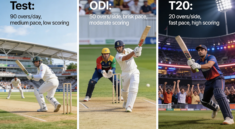
Applying T20 logic to ODI markets: In ODIs, the first wicket partnership average for top 8 teams is 50–80 runs — significantly higher than T20. The bookmaker’s line will reflect this, but the variance is also lower. ODI opening partnership markets settle more slowly (more balls, longer innings) and should be sized and priced differently. The same unit size applied to a T20 first wicket bet is appropriate for ODI — but the analytical framework must account for the longer partnership duration.
Ignoring extras: Wides and no-balls count toward the partnership total. Against aggressive openers who draw swing bowling, the new-ball bowler may concede 3-4 extras in their first over. These directly inflate the partnership total toward the Over. At venues like Wankhede or Chinnaswamy where powerplay conditions produce more extras, the Over in partnership markets carries additional structural support.
Conclusion: Smarter Bets On First Wicket Partnership Runs
The first wicket partnership market is cricket betting at its most analytical. Confirm the openers. Identify the new-ball bowler. Pull the venue’s powerplay average and compare it to the bookmaker’s line. Check both openers’ recent form at the same venue and against the same attack type. Apply the toss decision as a final modifier.
This five-step process transforms a market that most bettors approach emotionally — betting on their favourite opener — into a structured analytical exercise. The opening stand has been decided long before the toss: by squad selection, pitch preparation, and the specific match-up between two openers and the first three overs of a bowling attack. Your job as a bettor is to read those variables better than the bookmaker’s default line. In a market that settles within the first 6 overs of a T20, that edge compounds quickly over a full season.