A one-sided cricket match creates a specific problem for bettors: the favourite is priced so short that backing them offers almost no value, while the underdog at inflated odds requires a genuine upset to pay out. Handicap betting solves this problem entirely. By giving one team a virtual head start or virtual deficit in runs or wickets before a ball is bowled, bookmakers restructure the market into something far more balanced — and far more analytical. This guide covers everything: how runs and wickets handicaps work, Asian handicap variations, format-specific applications, and the advanced strategies that generate consistent edge.
What Handicap Betting Means In Cricket
Handicap betting changes the way a match is viewed because the focus shifts from who wins to how much they win by. The bookmaker adds a virtual head start to the weaker team and a virtual deficit to the stronger team, so both sides are priced at closer to even money rather than one at 1.20 and the other at 5.00.
The core principle: a handicap bet is a method of making things more even between two teams in a cricket match. When it’s clear that one team is the favourite, a handicap will be added to that team, which provides a slight advantage to the underdog.
A simple example: India vs Ireland in a T20 match. India is priced at 1.10 in the match-winner market — barely worth backing. With a handicap of India -15.5 runs, you are now betting that India will win by 16 or more. Ireland receives +15.5 runs, meaning they can lose by up to 15 runs and your Ireland handicap bet still wins. Both sides are now priced at close to even money — typically 1.85–1.95 — and the market has genuine analytical content.
Runs Handicap Vs Wickets Handicap Explained
Cricket handicap markets take two primary forms:
Runs Handicap — The most popular variant. A runs handicap applies when the team you back bats first. The bookmaker subtracts the handicap figure from that team’s final total. The bet wins only if the adjusted score still stays above the opponent’s real total. For example, if a team carries a –18.5 runs handicap, they must win by at least 19 runs. Any margin smaller than that settles the bet as a loss, even if the team wins the match itself.
Wickets Handicap — Less common but analytically interesting. India would likely have a handicap of -3 wickets, which means they have to win the game but give up less than 3 wickets for you to get a successful bet. Scotland would have a +3 handicap, which means they win the match completely or lose by less than 3 wickets for the bet to be successful.
Over Handicap — Based on number of overs, mostly in T20. This niche market relates to which team scores more runs in a specific over range — the first 10 overs, for instance.
Player Handicap — Focused on individual player stats. For example, Virat Kohli handicapped at -15.5 runs means he must score 16+ for your bet to win; +15.5 means he can score 0–15 and you still win.
Series Handicap — A series handicap stretches across multiple matches. The line might look like Australia –1.5 or England +1.5 in a five-match Ashes series. A team priced at –1.5 must win the series by at least two matches. A team at +1.5 can lose the series but still win the handicap bet if they stay close across the tour.
How Cricket Handicap Markets Work
The mechanics of settlement depend on whether you back the minus side (favourite) or the plus side (underdog):
| Sign | Team | What it means |
| Minus (-) | Favourite | Must win by MORE than the handicap figure |
| Plus (+) | Underdog | Can lose by LESS than the handicap, draw, or win outright |
Worked example — T20 match:
KKR vs Punjab Kings (PBKS). KKR are favourites. Bookmaker sets:
– KKR -18.5 runs
– PBKS +18.5 runs
Scenario A: KKR win by 25 runs → KKR handicap bet WINS (25 > 18.5) Scenario B: KKR win by 12 runs → KKR handicap bet LOSES (12 < 18.5); PBKS handicap bet WINS Scenario C: PBKS win outright → PBKS handicap bet WINS
The use of a half-run decimal (18.5, 24.5, etc.) eliminates the possibility of a tie — there is always a clear winner or loser in the handicap bet.
Understanding Asian Handicap Variations
Asian handicap betting is a system designed to eliminate the possibility of a draw, making matches more competitive from a betting perspective. It works by giving one team a virtual advantage or disadvantage before the match begins, balancing the odds.
In cricket, the Asian handicap adapts the format that originated in football. The key distinction from the standard European handicap:
Standard (European) Handicap: Uses whole numbers. A draw is possible in the adjusted result, leading to a three-outcome market (win, draw, loss on handicap). Less common in cricket because half-run lines eliminate ties anyway.
Asian Handicap in Cricket: Asian handicaps remove the draw and use half or quarter goals. In cricket, this translates to half-run lines (.5) that eliminate ties completely, giving only two outcomes: win or lose. This is the most common form you will encounter in cricket handicap markets on Indian platforms.
Split Asian Handicap: A bet split across two handicap lines simultaneously. For example, India -10.5/-11.5: half your stake is on India -10.5 and half on India -11.5.
– If India wins by 12+: full win on both halves
– If India wins by 11: half win (India wins -10.5 leg) + half push (returns stake on -11.5 leg)
– If India wins by 10 or fewer: full loss
This split structure reduces variance — you cannot have a catastrophic full loss on a near-miss result.
When Handicap Bets Offer The Best Value
Handicap betting in cricket gives one team an artificial advantage to level the playing field, making it a popular choice among bettors. It allows for more balanced odds, especially when a strong favourite faces a weaker opponent.
The four match contexts where handicap markets consistently offer best value:
– Elite team vs. associate nation: India vs Netherlands, Australia vs Namibia in World Cups. Standard match-winner odds are near 1.05 — useless for betting. The handicap market (India -45.5 runs in a T20) creates a genuine analytical question that rewards research.
– Mid-table rivalry with form divergence: Two teams of roughly equal historical ranking but one is in significantly better current form. The match-winner market will be 1.65/2.20 — some value, but compressed. A moderate runs handicap (-10.5/-12.5) on the in-form side at 1.85–1.90 offers better risk-adjusted return.
– Series handicap in a 5-match series: When one team has won the first two matches of a five-match series. At -1.5 series matches, the leading team only needs to win one of the remaining three matches to cover. This is often significantly underpriced when a clearly superior team holds the lead.
– Format-specific mismatches at known venues: An ODI between teams with dramatically different ODI rankings at a venue that strongly favours one team’s bowling style. The runs handicap at such a venue — where the home team wins by 40+ runs regularly — may be set conservatively, offering Over value.
Format Differences In Handicap Betting
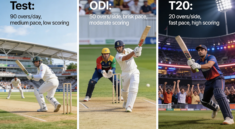
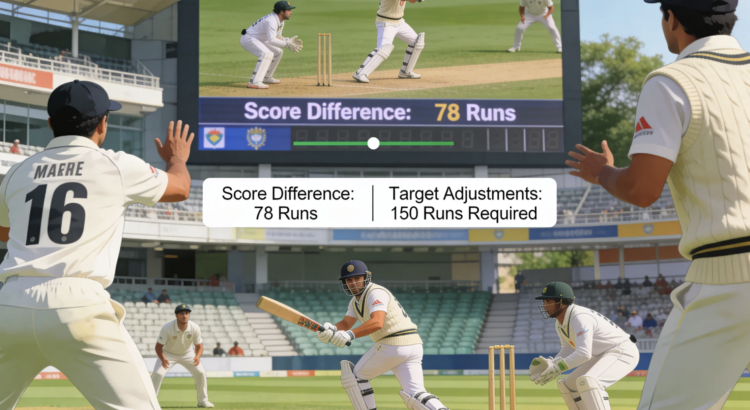
In white-ball cricket, the margins stay moderate, often around 6–30 runs or 1.5–4.5 wickets. Test match handicap lines can be far bigger because the gap between teams may reach hundreds of runs or even an innings. A favourite might be listed at –150.5 runs, while the weaker side receives +150.5.
T20 Cricket: T20 games typically have small margins due to their brevity. A typical T20 handicap line between mismatched teams: -15.5 to -25.5 runs. The short format compresses winning margins — even the best T20 teams rarely win by 60+ runs consistently, which limits how far the minus side can be stretched. T20 wicket handicaps (-2.5 to -4.5) are tighter for the same reason.
ODI Cricket: Wider range — -20.5 to -50.5 runs for moderate mismatches; up to -80.5 for significant quality gaps. With 50 overs per side, strong teams have more opportunity to pile on runs or restrict with their full bowling arsenal. ODI series handicaps are particularly popular and analytically accessible.
Test Cricket: The biggest and most volatile handicap lines. A favourite might be listed at –150.5 runs, while the weaker side receives +150.5. First innings lead handicaps exist as separate markets — specifically whether the leading team’s first innings advantage exceeds a certain threshold. The draw variable makes full-match Test handicaps more complex; first innings lead markets are cleaner and more predictable.
Team Strength Analysis Before Placing A Handicap Bet
The key question in a handicap bet is not “who will win?” but “by how much?” This requires a different analytical framework:
Batting depth and tail: A team batting 8 or 9 deep scores more runs and potentially wins by larger margins. KKR’s IPL 2026 squad — with Cameron Green (₹25.2 crore), Sunil Narine, Rinku Singh and Ajinkya Rahane — has legitimate batting contribution through 8. Against weaker IPL opponents, KKR’s depth creates consistent large-margin potential that supports the minus side of their handicap.
Bowling unit completeness: A four-bowler attack with a weak fifth option leaks runs in the death overs. India’s ODI attack — Bumrah (ODI economy 5.00 in 2023) + Shami + Siraj + Hardik Pandya + a spinner — allows them to apply consistent pressure across 50 overs. A complete bowling unit is the strongest indicator of a large winning margin, which drives the minus side of a runs handicap.
Opposition batting fragility: Associate nations often have strong top-threes and fragile lower orders. If a wicket cluster removes the top 3 cheaply, the innings collapses quickly and the margin balloons. Research the specific team’s historic collapse patterns in similar fixtures.
Pitch And Venue Impact On Handicap Outcomes
Pitch type directly affects how large winning margins become:
Flat pitches at high-scoring venues: Bengaluru (Chinnaswamy), Hyderabad (Rajiv Gandhi) — batting-dominant, high totals. Large first-innings scores increase the possibility of large winning margins. Plus-side handicap bets (backing the underdog) at these venues require the underdog to post a competitive total — difficult on flat decks.
Bowler-friendly surfaces: Chepauk (Chennai), Lord’s (London Day 1-2), Perth WACA — bowling dominance compresses scoring. Innings collapses are more common, margins can be either very large (40+ if one team collapses) or very tight (both teams struggle). The variance in outcome makes these pitches harder to price for handicap purposes.
Implication for bettors: At flat, high-scoring venues, the minus side of a runs handicap has structural support because large totals are probable. At bowler-friendly venues, the pitch introduces unpredictability that narrows handicap edge on either side.
Toss And Match Conditions That Influence The Spread
Handicap markets in cricket depend on who bats first because the path to victory changes once the match format is set. A side that posts a total creates a target, while a side that chases measures success by wickets in hand. Bookmakers build handicap lines around these two different match states.
The toss decision triggers the flip-flop structure in dual-format handicap lines:
– Team bats first: Runs handicap applies (winning by run margin)
– Team chases: Wickets handicap applies (winning by wickets remaining)
The flip-flop structure keeps the handicap relevant under any match script, so the core question stays the same: can the favourite win with enough control, or can the underdog resist beyond the line?
Dew factor and chasing: In IPL evening T20s, dew helps chasing teams. A team chasing with dew advantage wins more often — and wins more easily — than expected. This increases the probability of the chasing-team handicap covers on the minus side, because they win with wickets to spare at a faster run rate than required.
Live Handicap Betting Opportunities
Live handicap markets are available during T20 and ODI matches. Three specific live triggers for handicap value:
– Powerplay score vs expectations: If the batting team scores 70+ in the powerplay (well above average), their final total is likely to be large. For a strong team already as minus-side favourite, this powerplay over-performance increases their winning-margin probability. The minus-side handicap live line will have been set conservatively before the match — the powerplay data now supports a higher handicap, and the minus side still carries value if the bookmaker lags in adjustment.
– Wicket cluster at key moment: When the opposition’s top 3 are removed cheaply (say, 3 wickets for 20 runs in overs 3–8 of a T20 chase), the winning margin for the bowling team is likely to expand rapidly. Live minus-side handicap bets gain structural support in this scenario.
– Death overs with premium bowler available: When India (or any team with Bumrah) enters their death overs with their best bowler at full quota still available, the final 4 overs will be restrictive. This reduces the chasing team’s total, which increases the winning margin. Live runs handicap for the bowling team gains support.
Advanced Strategies For Handicap Betting
- Margin analysis over match result: Build a database of recent match margins for the specific teams involved. If Team A wins their last 5 home T20s by margins of 22, 31, 18, 27 and 45 runs, their expected margin against a weaker opponent at home is clearly above 18 — meaning a -18.5 handicap in their favour is consistently achievable. This historical margin mapping is the most reliable input for runs handicap pre-match analysis.
- Series handicap compounding: In a 5-match series, track how the leading team performs after going 1-0 or 2-0 up. Some teams (Australia at home in bilateral ODI series) are structurally dominant once they take a series lead — their minus-1.5 series handicap becomes a high-probability bet even with 3 matches remaining.
- Venue + bowling unit alignment: Back the minus side of a runs handicap when: (a) flat pitch confirmed, (b) the favourite has a complete 5-bowler attack including a death specialist, (c) the underdog has a weak tail (batting position 8–11 are non-contributors). All three factors aligning creates the structural conditions for large winning margins.
- Exploit bookmaker line lag: Handicap lines are set before toss and sometimes before confirmed XIs. When a key player (top power-hitter for the underdog) is announced absent at the last minute, the bookmaker may not immediately shift the handicap line. The minus-side bet gains value from this information lag — act in the 15–30 minute window before the line adjusts.
- Unit sizing: Handicap betting can offer better value when the odds are pretty disparate. The balanced 1.85–1.95 pricing on both sides of a handicap market means variance is similar to a match-winner bet. Standard unit sizing applies: 1.5% of bankroll per handicap bet. Series handicaps covering multiple matches carry less single-match variance and can justify slightly larger units (2%) when the analytical conviction is high.
Final Analytical Framework
Before every cricket handicap bet, apply these five checks:
- What is the bookmaker’s margin line? Compare to the team’s historical winning margins in similar fixtures
- Who bats first? Toss decision determines which handicap variant activates (runs vs. wickets)
- Is the pitch flat or bowler-friendly? Flat pitches support larger margins; bowler-friendly pitches compress them
- Are both XIs confirmed? Key player absences on either side shift the realistic margin distribution significantly
- What is the format? T20 handicap lines are tighter (6–30 runs); ODI lines are wider (20–80 runs); Test lines can reach 150+ runs
Handicap betting converts the most one-sided cricket fixtures into the most analytically rewarding betting opportunities. The structure removes the need to call an upset — you are simply assessing whether a superior team wins by enough, or whether a weaker team can limit the damage. That is a more answerable question than match outcome prediction in most cases, and the 1.85–1.90 pricing on both sides means the returns are worth the analytical investment.