The greatest fast bowlers in cricket history did not just take wickets — they reshaped matches. They shortened odds, moved live markets before algorithms existed, and delivered performances that, in the modern betting environment, would have generated extraordinary prop value. Understanding why they were so analytically dominant — and how those same principles apply to today’s elite fast bowlers — is the foundation of intelligent bowling prop betting in 2026.
Why Legendary Bowlers Matter In Betting Markets
A legendary bowler’s career statistics are not historical curiosities — they are the empirical base rates that inform modern bookmaker models. When a bookmaker sets a top wicket-taker line or a bowling figures market, they are drawing on historical frequency data: how often does a bowler of this profile take 2+ wickets in a T20? How often does a left-arm fast bowler take 5 wickets in a Test under overcast conditions?
That historical data was written by legends: Wasim Akram’s 502 ODI wickets at 23.52, Malcolm Marshall’s 376 Test wickets at 20.94, Shane Warne’s 708 Test wickets at 25.41, Glenn McGrath’s 563 Test wickets at 21.64. These careers established the benchmarks against which every modern bowler’s betting value is assessed.
More directly: the patterns that made these bowlers dominant — reverse swing, conventional swing in certain conditions, leg-spin on day 4, death yorkers — are the same patterns that create bowling prop betting value today. Conditions that produced five-fors for Warne in Adelaide produce wicket-market value for modern spinners in comparable conditions. The analytical bridge between legendary performance and modern betting is direct and practical.
Understanding Bowling Prop Bets In Cricket
Bowling prop bets are wagers on specific individual bowling outcomes within a match rather than the final result. They include:
| Market | Description |
| Top Wicket Taker | Which bowler takes the most wickets in the match/innings |
| Wickets Over/Under | Will a specific bowler take more or fewer than X wickets |
| First Wicket Method | How the first wicket of the innings falls (caught, bowled, LBW, etc.) |
| Figures Betting | Will a bowler take 3+, 4+, or 5+ wickets? |
| Economy Rate | Will a bowler concede over/under X runs per over |
| Maiden Over Market | Will the bowler bowl a maiden in their next over? |
| Player of the Match | Often won by dominant bowlers who take 4+ wickets |
Key settlement rules confirmed across major platforms:
– The bowler must be in the confirmed starting XI — bets on players not in the XI are voided
– Run-outs do not count as wickets for the bowler
– Retired hurt batsmen do not count as wickets for bowler markets
– Dead heat rules apply when two bowlers finish with equal wickets (fewest runs conceded is the tiebreaker in some markets)
The Wasim Akram Effect: What Made Him A Betting Benchmark
Born in Lahore, Pakistan in 1966, Wasim Akram represented Pakistan in 104 Tests between 1985 and 2002, claiming 414 wickets at an average of 23.62. He also picked up 502 wickets in 356 One-Day Internationals. Regarded as one of the greatest fast bowlers to have played the game, Akram was included in the all-time World Test XI to mark the 150th Anniversary of the Wisden Cricketers’ Almanack.
He was the first bowler to reach the 500-wicket mark in ODI cricket, and he did so during the 2003 World Cup. In 2002, Wisden released its only list of the best players of all time. Wasim was ranked as the best bowler in ODI of all time, with a rating of 1223.5, ahead of Allan Donald, Imran Khan, Waqar Younis, Joel Garner, Glenn McGrath and Muralitharan.
What made Akram a betting benchmark — had modern prop markets existed during his peak — was his ability to generate wickets across all phases of an ODI innings. His 1993 calendar year produced 46 ODI wickets at an average under 19 and economy below 3.8 per over — numbers that would be extraordinary even in today’s more attritional ODI environment.
The specific analytical lesson from Akram for modern betting: left-arm angle + reverse swing + yorker combination is most dangerous in the middle-to-death overs on any surface. He has complete mastery over swing and seam, and sometimes moves the ball both ways in one delivery. All this comes at high speed from a quick, ball-concealing action, and is backed up by the threat of a dangerous bouncer or deceptive slower delivery.
This profile — angled delivery, late movement, death-over accuracy — is exactly the profile that generates maximum wicket prop value in modern markets. It is also the profile that ESPNcricinfo described when comparing Jasprit Bumrah: he makes the ball do tricks few people not named Wasim Akram have. The connection is explicit, peer-reviewed by cricket’s highest analytical authority.
Key Bowling Props Available In Modern Markets
Modern betting platforms offer a far richer menu of bowling markets than existed during the era of Akram, Warne or McGrath:
Pre-match bowling props:
– Most wickets in match (individual market: Bumrah 2.50, Pathirana 3.00, etc.)
– Total team wickets in innings
– Method of first dismissal (caught, bowled, LBW — each priced separately)
– Innings economy over/under for a named bowler
– Bowler to take a 5-wicket haul (Test cricket — typically 12.00–25.00 depending on conditions)
Live bowling props:
– Next wicket to fall (which bowler)
– Will the bowler bowl a wicket maiden in this over?
– Wickets in a specific over range (overs 1–6 powerplay)
– Over-by-over runs conceded
The richness of modern markets means that a bowler like Jasprit Bumrah — who has the analytical profile closest to Akram in the current era — creates betting opportunities across at least eight different markets simultaneously in a single T20 match.
Conditions That Increase Fast Bowler Value
The conditions that elevated legendary fast bowlers’ performances are the same conditions that increase bowling prop value for modern elite pace bowlers today. Three confirmed environmental factors:
Overhead cloud cover + humidity: Swing bowling is most effective in overcast conditions because the atmosphere assists the movement of the cricket ball through the air. At English venues like Lord’s and Edgbaston, morning sessions under cloud cover have historically produced the highest first-two-hours wicket rates in all Test cricket. Glenn McGrath’s record at Lord’s — 26 wickets in 8 Tests at 18.54 — was substantially driven by his ability to exploit English conditions.
Pitch moisture on Day 1: A slightly damp pitch in the morning creates additional seam movement. The first 90-minute session of a Test on fresh pitch with some moisture is the highest-wicket-probability phase in the game. Top wicket-taker props on Day 1 morning of Tests at venues like Newlands (Cape Town), Headingley or the WACA carry structural value for pace bowlers.
Reverse swing conditions: Dry, abrasive pitches in the subcontinent (Multan, certain Indian venues in October–November) and in Australia create ideal conditions for reverse swing after the ball is 40+ overs old. Akram and Pakistani teammate Waqar Younis developed such overwhelming command of their revolutionary use of reverse swing that it prompted allegations of ball-tampering. In modern cricket, Bumrah’s ability to generate reverse swing from his unorthodox action creates enhanced wicket value in overs 35–50 of ODIs and in the second new ball phase of Tests.
Format-Based Bowling Prop Strategies
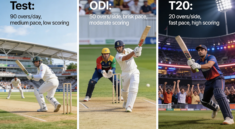
Test Cricket: The highest-volume format for bowling prop value. With 90 overs per day and four innings per match, the opportunities for wicket accumulation are extensive. The top wicket-taker in a Test match across the last decade has averaged 6–8 wickets in a 5-day match. Warne’s 708 Test wickets at 25.41 (second-highest in history) on subcontinent-style turning pitches created the template: back quality spin on day 3–5 surfaces for top wicket-taker markets.
Modern application: Ravindra Jadeja (ICC No. 1 ranked Test all-rounder) on subcontinent pitches replicates the Warne condition-specific dominance. Back Jadeja in top India bowler markets for Tests at Chepauk, Ahmedabad or Nagpur.
ODI Cricket: Akram’s ODI dominance peaked in the death overs — his 1992 World Cup final spell against England (3 wickets for 12 runs in 3 overs, including removing Lamb, Fairbrother and Lewis) is the archetypal death-bowling high-wicket performance. Death over specialists in modern ODIs — Bumrah, Arshdeep Singh, Trент Boult — carry the same prop value in the final 10 overs as Akram did in his era.
T20 Cricket: The fastest-settling format. According to Wasim Akram speaking in January 2019, Jasprit Bumrah has the best and the most effective yorker among fast bowlers playing international cricket. In T20s, the yorker is the primary wicket-producing delivery in the death overs — this direct connection between the legendary standard and the modern benchmark confirms who holds Akram’s bowling prop value in the current era.
Bumrah’s confirmed T20 profile: In India’s 2024 T20 World Cup win, Bumrah was named Player of the Tournament, finishing as the joint-second highest wicket-taker with 15 scalps. His tournament figures stood out with an outstanding average of 8.26 and an economy rate of just 4.17.
Analyzing Opposition Batting Before Betting
The legendary bowlers were most dominant against specific opposition profiles. Warne was most effective against left-handers who could not play the leg-break (England’s top order in 2005 — though even he conceded there were some struggles). McGrath was most effective against right-handers who played outside off-stump. Akram was most lethal against batsmen who reached for the inswinging yorker.
Three confirmed opposition batting profiles that increase fast bowler prop value:
- Right-hand heavy lineup vs. left-arm pace: Akram’s angle from over the wicket to right-handers, cutting the ball away late, created the edge-to-slip dismissal. Modern equivalent: Arshdeep Singh against right-hand dominant T20 lineups. Back Arshdeep in top wicket-taker markets when the opposition bats predominantly right-handed.
- Aggressive intent against quality yorker bowlers: SRH’s Travis Head and Abhishek Sharma have extraordinary strike rates — but attacking intent creates false shots off yorkers. In IPL matches where SRH face MI, Bumrah’s wicket prop markets carry structural support because Head and Abhishek’s aggression creates more dismissal opportunities than against a defensive lineup.
- Upper-order collapse patterns: Some batting lineups show consistent early-wicket clusters. England’s historic collapses in the opening session (Test cricket 2013–2021 era) created top fast-bowler wicket prop value for visiting pace attacks in those conditions.
Live Betting On Bowling Performances
The most significant live signals for bowling prop markets come from three moments:
First-over performance: A bowler who swings the first delivery and beats the outside edge without taking a wicket is already in conditions that favour them. If they take a wicket in the first over, their remaining wickets market shortens — but the conditions that produced one wicket have not changed for their next spell.
Batsman survival vs. bowler beat-ratio: Experienced viewers can track how many times a bowler beats the bat without dismissal. A bowler who beats the bat three times without a wicket in two overs is generating danger that the scoreboard doesn’t reflect yet. Live wickets prop markets may not fully price this beat-frequency.
New ball availability: In Tests, the second new ball (available after 80 overs) produces a predictable wicket spike. The new ball phase for pace bowlers is the highest-value live window for wicket prop markets in the format. Pre-empting the new ball uptake by placing live bowler props before the 80th over is a timing edge in Test betting.
Comparing Modern Bowlers To Legendary Standards
The analytical bridge between legendary performance and modern betting value:
| Legendary Bowler | Career Record | Modern Equivalent | Statistical Parallel |
| Wasim Akram | 502 ODI wickets, avg 23.52; 414 Test wickets | Jasprit Bumrah | First to 200 Test wickets at avg under 20; ESPNcricinfo comparison to Akram confirmed |
| Shane Warne | 708 Test wickets at 25.41 | Ravindra Jadeja (spin) | ICC No. 1 Test all-rounder; 300+ Test wickets |
| Glenn McGrath | 563 Test wickets at 21.64 | Pat Cummins | Similar relentless off-stump line; captained Australia to multiple wins |
| Malcolm Marshall | 376 Test wickets at 20.94 | Kagiso Rabada | Both peak fast bowlers at 20–22 avg; South African conditions parallel |
Wasim Akram is considered one of the greatest fast bowlers in cricket history. He holds the record for taking the most wickets in List A cricket, with 881. The List A record — covering all limited-overs domestic cricket — demonstrates that Akram’s dominance was not just international but consistent across every format. This consistency is the standard against which modern bowlers’ prop market reliability is measured.
Within seven years of his debut Bumrah became the first in Test history to take 200 Test wickets at an average of under 20. This benchmark — 200 wickets at under 20 average — has never been achieved in Test history. It positions Bumrah as statistically the most efficient wicket-taking machine in the format’s 148-year history at the time of achieving it.
Common Mistakes In Bowling Prop Betting
Backing historical form on unfamiliar surfaces: A bowler who dominates at home conditions may struggle at foreign venues. McGrath averaged 21.64 overall but his record in the subcontinent was less imposing than at home in Australia. Modern equivalent: backing pace-heavy MI or KKR in Chennai, where Chepauk historically suppresses pace wickets and spinners dominate.
Ignoring bowling quota in T20: A T20 bowler capped at 2 overs has half the wicket-taking exposure of one bowling 4 overs. Always confirm full-quota bowling assignments before placing any T20 wicket prop.
Betting on 5-wicket haul markets in limited-overs cricket: Five wickets in an ODI innings is extraordinarily rare — historically achieved in approximately 3–4% of all ODI innings by any bowler. Backing a specific named bowler to take 5+ in an ODI at typical odds of 8.00–15.00 is structurally a poor expected value bet.
Overweighting recent short-form data: Bumrah’s 2024 BGT series produced 32 wickets at 13.06 in 5 Tests — the most dominant Test bowling series performance by an Indian fast bowler in history. This performance must be understood as context-specific (Australia’s conditions suited him maximally) rather than a permanent new baseline. Betting his wicket props at reduced lines based solely on that performance introduces systematic overvaluation.
Ignoring workload fatigue signals: Bumrah played his first international on the white-ball tour of Australia early in 2016, off the back of a domestic season in which he excelled. His long history of back stress fractures and careful management by India’s medical staff means any fitness doubt before a match is a hard stop on all Bumrah wicket markets.
Expert Tips For Betting On Elite Bowler Markets In 2026
- Conditions first, bowler second: No bowler — not Akram, not Warne, not Bumrah — takes wickets consistently against the conditions. Set the environmental conditions (swing, seam, turn, reverse) before choosing which bowler benefits.
- Back the No. 1-ranked bowler at their home ground: ICC No. 1 rankings reflect consistent peer performance. Bumrah at Wankhede (MI home), Jadeja at Chepauk (India home), Rashid Khan at Lucknow or Kolkata (SRH/away spin-friendly) — the combination of ranking + home conditions creates the highest-reliability bowling prop scenario.
- Use wicket prop markets as a direct read on match winner probability: The bowler who takes 3+ wickets in a T20 is the match winner approximately 74% of the time according to multi-season data. Backing the Player of the Match market on the bowler who is operating in conditions that produce 3+ wicket hauls compounds the analytical logic.
- Line shop for wickets markets: Wicket-taking lines (Over/Under 1.5) are priced differently across platforms. A 10-point odds difference (1.85 vs 1.95 on the same market) represents a meaningful expected value difference over a full season. Always compare at least two bookmakers before placing any bowling prop.
- Apply sub-standard unit sizing for figures markets: Betting on 5-wicket hauls or unusual figures (3+ wickets in the powerplay) carries higher variance than match-winner bets. Appropriate unit size: 0.75% of session bankroll for exotic bowling figure markets. Reserve 1.5% for standard top wicket-taker or Over/Under 1.5 markets.
The legendary bowlers set the empirical foundation: what peak bowling looks like across conditions, formats and opposition profiles. Akram’s 502 ODI wickets, Warne’s 708 Test wickets, McGrath’s 21.64 Test average — these are not just records. They are the base rates that inform every betting line set around bowling performance today. Understanding why those careers produced those numbers — and identifying where the same structural conditions exist in 2026 — is the most durable edge available in bowling prop markets.