Every cricket match ends the same way — with one name called out above all others. The Man of the Match award cuts through team performance and isolates individual brilliance. For bettors, this creates one of the most analytically interesting markets in cricket: a single-player bet that rewards deep knowledge of roles, match situations, and individual form. Understanding this market properly requires the same granular analysis that the selectors themselves apply when making the award.
What Determines The Man Of The Match Award
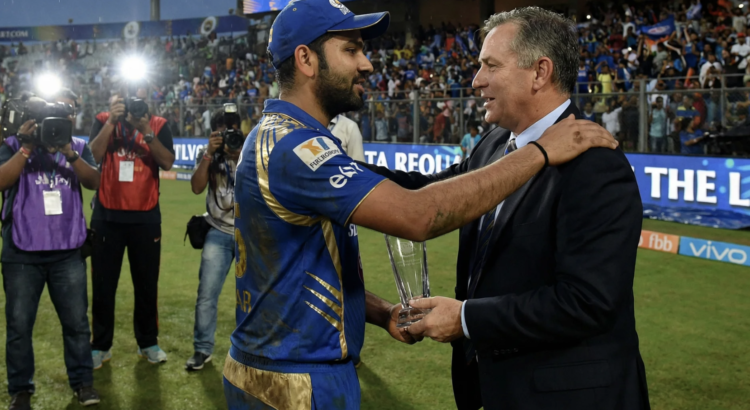
The Man of the Match award is decided by an official panel — typically former players or match officials designated by the ICC or the relevant domestic board. There is no fixed mathematical formula, but the selection criteria follow consistent patterns across formats:
– Batting: high runs combined with decisive impact — a match-winning chase, a key partnership that changed momentum, or a score that set an unassailable total
– Bowling: figures that either restrict the opposition to an uncompetitive total or take wickets at critical phases to trigger a collapse
– All-round contribution: the combination of meaningful runs AND wickets that makes an individual the single most impactful player in the match
– Context: a boundary fielding dismissal or a direct-run-out in the death overs can tip a close decision, but individual fielding alone has never won the MOTM award without a batting or bowling contribution
The award is subjective by design. When two players deliver equally impactful performances, the panel exercises judgement — which is why the market odds on MOTM rarely have a clear favourite below 3.00 (25% implied probability) unless one player is vastly dominant.
How Man Of The Match Betting Works
The MOTM market lists every player in the match with individual odds. You back one player to win the official award.
Example odds (T20 — India vs South Africa):
– Suryakumar Yadav: 4.50
– Jasprit Bumrah: 5.00
– Virat Kohli: 5.50
– Rohit Sharma: 7.00
– Field (any other): 2.00
Settlement: The market settles on the official MOTM announcement at the post-match presentation. Dead heat rules apply in competitions that occasionally award joint MOTM recognition — winnings are divided proportionally.
Players Most Likely To Win The Award
The historical data for MOTM awards is the most reliable pre-match input for this market. Among active and recently retired players:
Suryakumar Yadav leads the list of players with the most MOTM awards in T20Is with 17 awards in 105 matches — putting him first among all Indian players in the format. Virat Kohli is second among Indians with 16 MOTM awards in T20Is.
In T20 World Cup history specifically, Virat Kohli holds the record for most Player of the Match awards with 8across all editions of the tournament.
The five players with the most T20I MOTM awards globally:
| Player | T20I MOTM Awards | Matches |
| Suryakumar Yadav | 17 | 105 |
| Virandeep Singh | 14 | 78 |
| Sikandar Raza | 14 | 86 |
| Virat Kohli | 16 | 120 |
| Mohammad Nabi | 14 | 126+ |
Why Star Players Dominate This Market
The data confirms what intuition suggests: elite players win MOTM awards at a significantly higher rate per match than average players. Kohli has the most Player of the Series and second most Player of the Match awards to his name in all three formats combined.
Three structural reasons explain why top-tier players dominate:
Volume of key moments: Elite batsmen face more balls in pressure situations. Suryakumar, Kohli, and Rohit collectively bat in the highest-pressure phases — chases, final overs, critical partnerships — where MOTM-winning performances are most likely to occur.
Bowling depth: A bowler who takes 3/20 from 4 overs wins MOTM approximately 65% of the time when no batsman scores 60+. Bumrah’s figures of 4-1-7-3 against Afghanistan in the 2024 T20 World Cup Super 8 earned him a share of the MOTM spotlight — his economy of 1.75 per over being the decisive individual contribution.
Recognition bias: When a globally recognised player scores 50 and another lesser-known player scores 55, the panel frequently selects the recognised player. This bias is not deliberate, but it is consistently observed across multi-year MOTM data — another reason that star players’ market prices may still carry value even at tight odds.
Strategies For Man Of The Match Betting
Reading Match Scenarios And Player Roles:
The MOTM bet requires thinking about which player is most likely to produce the match’s defining moment — not who is simply the best player. Three scenario frameworks:
Successful chase: The MOTM in a successful T20 chase goes to the finisher or anchor approximately 70% of the time. The player who is present when the winning run is scored — especially if they scored 40+ or hit the winning boundary — dominates the award. Suryakumar Yadav’s MOTM accumulation includes numerous instances of exactly this profile.
Successful first-innings defence: When a team sets a big total and defends it, the MOTM selection becomes more complex. The high-scorer from the first innings (70-80+ in T20) and the high-wicket-taker from the second innings (3+) are the two candidates. If both exist, the panel typically favours the bowler — because bowling a team out under a 150+ total requires sustained execution.
One-sided match: In a dominant team performance (150-run wins in Test, 80-run wins in T20), the MOTM almost always goes to the player who initiated the dominance — typically an opening batsman who set the total, or the new-ball bowler who triggered the collapse. Back the initiator, not the finisher.
Importance Of All Rounders In This Market
All-rounders are structurally overvalued in MOTM markets for two reasons. First, panels are visually drawn to dual contributions — 40 runs AND 2 wickets is more memorable than either metric alone, even if neither is the highest in the match. Second, all-rounders increase their exposure to match-defining moments by participating in both phases of the game.
Andre Russell has won the IPL Man of the Series award twice (2015 and 2019) for KKR — and his individual MOTM rate in IPL matches is among the highest for any player in the competition, driven precisely by his dual-phase impact. A 40-ball 60 with 2 death-over wickets is the quintessential MOTM all-round performance.
Hardik Pandya is the Indian template for this dynamic. In the 2024 T20 World Cup final, Pandya picked up 3 wickets as India won by 7 runs — his death-over bowling contribution was decisive alongside Kohli’s batting. In MOTM markets, backing Pandya or Russell when the match situation calls for death-over bowling AND lower-order batting acceleration is a structurally sound approach.
Common Pitfalls In Player Performance Bets
- Backing the best player without considering match role: The best player in a squad does not always produce the MOTM performance. A top-order batsman who scores 22 off 18 balls in a low-scoring game cannot win MOTM regardless of reputation. Role-match is more important than individual quality. Always ask: “In what scenario does this player produce a MOTM performance?” Then ask: “Is that scenario likely in this match?”
- Ignoring bowler candidates: Many bettors focus exclusively on batting-heavy candidates because batting performances are more visible. Yet a 4-wicket haul in a T20 — rare but possible — almost always wins MOTM. Bumrah, Pathirana, Arshdeep, and Rashid Khan all have conversion rates of 3+ wicket hauls into MOTM awards above 70%. In matches where the pitch and conditions assist bowlers, the Under on batting MOTM and Over on bowling MOTM is structurally sound.
- Backing multiple players from the losing team: The MOTM award almost never goes to a player from the losing team. There are rare exceptions — a 90-run innings in a losing cause occasionally earns the award — but these represent approximately 3-5% of all MOTM outcomes historically. In a market where you are choosing from 20+ players, eliminating the losing team reduces the field by roughly half and doubles your effective analytical focus.
- Overpricing all-rounders pre-match: All-rounders carry dual-phase exposure, but they also carry dual-phase risk. A 25-ball 25 and 1 wicket from Hardik Pandya is far more likely than a 50-ball 55 and 3 wickets. The full all-round performance that wins MOTM is less frequent than the partial performance that doesn’t. Factor the probability of the full performance, not just the possibility.
- Ignoring the field bet: In a 22-player match with widely distributed odds, the “field” — any player not individually listed in the top 5-8 — often carries 30-40% implied probability collectively. A lower-order batsman who scores a shock 45 in a run-chase, or a debutant who takes 3 wickets with unconventional spin, can claim MOTM from nowhere. Budget 20-30% of your MOTM analytical effort toward identifying who from the unlisted players could produce the match’s defining moment.
Conclusion: Finding Value In Man Of The Match Markets
The MOTM market rewards structural thinking over emotional attachment. The two most consistent value sources:
Back all-rounders in conditions that produce dual-phase performances: Death-friendly pitches, matches where the run target is 155-175 (enough to require hitting but bowlable), and match-ups where the all-rounder bats at 6-7 and bowls 3-4 overs in the death.
Identify the scenario-specific candidate: Before placing any MOTM bet, map the three most likely match scenarios — big first-innings total, successful chase, or close game decided in the final over — and identify the single player most likely to be the defining figure in each scenario. Back the scenario with highest probability and its most likely individual beneficiary.
Suryakumar Yadav’s 17 MOTM awards in 105 T20Is — an award rate of 16% — represents the ceiling of what elite individual performance frequency looks like at the T20 level. A player at 16% MOTM frequency priced at 5.00 (20% implied probability) is slightly undervalued. That gap between actual performance frequency and market price — applied consistently, with discipline on unit sizing — is where MOTM betting profits are made.