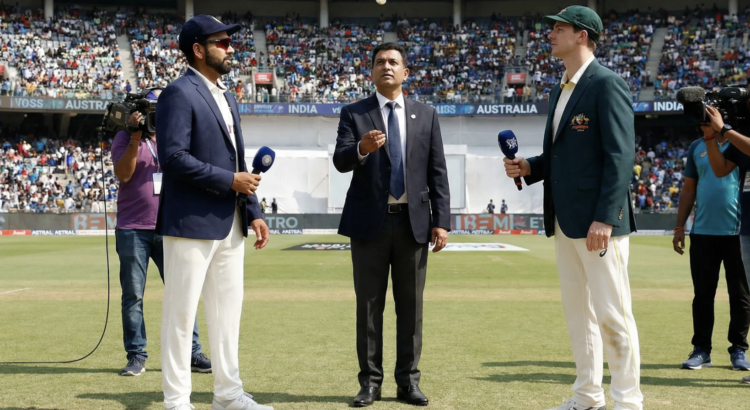
Before a single ball is bowled, before the XIs are even confirmed on the field, one moment quietly sets the tone for everything that follows: the toss. A coin spins in the air for barely a second, yet its outcome can shift win probabilities, reshape team strategies, and directly settle one of the most popular prop bets in cricket. The toss winner market is offered by virtually every bookmaker on every cricket match — and understanding exactly what you are betting on, why the odds are structured the way they are, and whether the market carries any exploitable edge is the foundation of intelligent toss betting.
Why The Toss Matters In Modern Cricket Matches
The toss matters because it hands the winning captain the ability to impose his preferred game plan on the match from the very first over. In T20 and IPL cricket, this is particularly significant. Across more than 1,000 IPL matches played from 2008 to 2024, teams that win the toss and choose to bat first win approximately 48% of the time, while teams that opt to chase win closer to 53% of the time. That five-percentage-point gap is not enormous, but it is consistent — and it reflects the structural advantage that comes with knowing the exact target you are chasing in the death overs.
Winning the toss allows a captain to impose their preferred game plan on the match from the very first over. It enables field placements, bowling rotations, and batting orders to be set proactively rather than reactively. Dew, pitch degradation, and knowledge of the target all amplify this advantage as the match progresses.
The format-specific impact is clear:
| Format | Toss winner’s match win rate |
| T20 Internationals | 52–55% |
| IPL (2008–2024) | ~51–53% (chasing wins 53%) |
| ODIs (1,500+ matches) | 47–50% |
| Tests | 37% (win toss) vs 31% (lose toss) |
The toss matters most in T20 cricket and least in Tests — where the longer format allows tactical recovery regardless of who wins the coin flip.
Understanding Toss Winner Betting Markets
The toss winner market is the simplest bet in cricket: which of the two captains will win the coin flip? There is no batting or bowling decision involved — you are betting purely on the outcome of a coin toss.
How it works:
– Two possible outcomes: Team A wins toss / Team B wins toss
– Odds are set by the bookmaker before the match
– The market settles the moment the toss result is announced — before any play begins
Settlement rules confirmed across major platforms:
– If the match is abandoned before the toss, all toss bets are voided
– The official toss result as announced by the match referee and umpires is the settled outcome
– Toss result is independent of who wins the match — toss bets settle regardless of the game result
How Odds Are Set For Toss Outcomes
A coin toss is, by definition, a 50/50 event. Bookmakers price accordingly:
| Team | Fair odds | Bookmaker typical odds |
| Team A (toss winner) | 2.00 (evens) | 1.90–1.95 |
| Team B (toss winner) | 2.00 (evens) | 1.90–1.95 |
The gap between fair odds (2.00) and typical bookmaker odds (1.90–1.95) represents the bookmaker’s margin — approximately 5–10%. This margin is built into every toss market, ensuring the bookmaker profits regardless of the outcome over a large sample.
There is no information asymmetry in a toss — no captain has skill over a coin flip. The bookmaker knows this, which is why toss odds rarely deviate from 1.90–1.95 regardless of team quality, venue, or form.
Statistical Trends In Toss Results
Toss outcomes over large samples confirm the 50/50 distribution — as expected from a fair coin. However, some franchise-level patterns are worth noting:
Gujarat Titans won about 58% of tosses across 33 matches in IPL 2022 and 2023. This high toss win percentage contributed to their tremendous success in both seasons — GT reached the finals on both occasions. This is a striking number, but it is important to understand that a 58% toss win rate over 33 matches is within the realm of statistical variance for a coin flip. Over a much larger sample, the rate would regress toward 50%.
Chennai Super Kings stand out as the team that converts toss wins into match wins most consistently in IPL history. Data shows CSK wins approximately 64% of their matches when they win the toss — the highest conversion rate in the league. Their philosophy has been disciplined and deliberate: read the surface, bowl first when there is any doubt, let spin bowling do damage in the middle overs, and back their experienced batting lineup to chase or set totals under pressure.
The CSK example illustrates a crucial distinction: their edge comes not from winning more tosses, but from making better decisions after winning. That decision-making skill is relevant to match-winner betting — not toss winner betting.
Strategies For Toss Winner Cricket Bets
Given the 50/50 nature of a coin flip, a genuine long-term strategy for the toss winner market is more limited than other cricket betting markets. However, a few principles apply:
- Line value identification: If a bookmaker prices one team’s toss odds at 2.10 (above fair value) due to asymmetric market demand — such as heavy public backing of the opposing team — there is marginal value. This is rare but can occur in heavily one-sided matches where public sentiment distorts toss odds.
- Use toss winner as a gateway bet to post-toss markets: The most practical application of toss analysis is not betting on the toss itself but using the toss result to identify value in the post-toss live market. At venues like Mumbai’s Wankhede Stadium, where dew affects evening games, teams winning the toss and choosing to chase have a 57% win rate. Knowing this, a bettor can prepare two positions — one for each toss outcome — and activate the appropriate live match-winner bet the moment the toss result and decision are announced.
- The decision-read strategy: The toss decision (bat or bowl) reveals information about pitch and conditions that the captain holds before anyone else. When a captain wins the toss and unexpectedly bats first on a surface that looks green and seaming, they are signalling confidence in their batting that the market may not immediately price. This decision-read is more valuable than the toss result itself.
- Volume discipline: No predictor can guarantee 100% accuracy since the toss is inherently a random 50-50 event. Any strategy that involves betting significant volume on toss winner markets will produce results clustered around 50% correct over large samples — minus the bookmaker margin. Keep toss winner bets to minimal unit sizes if you choose to bet them at all.
Conclusion: Should You Bet On The Cricket Toss
The honest answer is: Bet the toss for entertainment with stakes if you enjoy the immediacy of it settling before the first ball. But build your bankroll strategy around markets where analytical work creates genuine edge. The toss is one moment in a match that no amount of research can predict better than a coin.