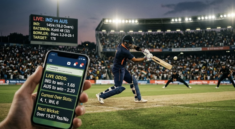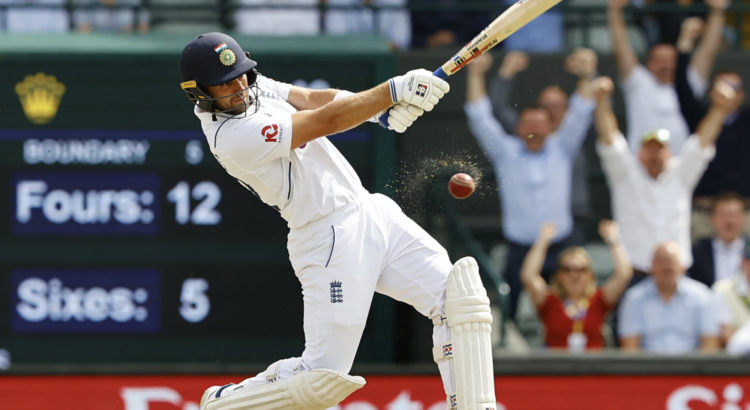
The numbers from the last two IPL seasons tell a story that bookmakers are still catching up with. IPL 2024 produced 1,260 sixes in 74 games — an all-time record for any IPL season and the only third time the tournament crossed 1,000 sixes. Then IPL 2025 arrived and immediately produced 37% more sixes and 34% more fours than the same stage in 2024. The boundary-hitting trend in T20 cricket is not random — it is structural, data-driven, and full of betting opportunity for punters who know where to look.
Understanding Total Sixes And Fours Markets
Total sixes and fours are prop betting markets focused on the number of boundaries hit across one team’s innings or across an entire match. They are separate markets — sixes only, fours only, or combined total boundaries — each with its own over/under line.
Key confirmed fact: On average across IPL history, approximately 39 boundaries (sixes + fours combined) are hit in every IPL match. Approximately 12 sixes are hit per match as the long-term IPL average from 2008 to 2024, though this number has been rising sharply.
The distinction between sixes and fours matters strategically:
| Boundary type | What drives it | Best betting context |
| Sixes | Ground dimensions + power hitters + pitch pace | Short boundary venues, flat decks, death overs |
| Fours | Placement technique + outfield pace + batting style | Fast outfields, classical top-order batsmen, powerplay |
Sixes and fours markets are complementary but not interchangeable. A slow pitch with large boundaries suppresses sixes while potentially producing more fours through technical shots. A fast flat pitch with short square boundaries produces both in volume.
Match Format Impact On Boundary Numbers
T20 Cricket: The highest-volume format for boundaries. IPL 2024’s 1,260 sixes in 74 matches equals approximately 17 sixes per match — the highest rate in IPL history. The powerplay produced eight scores of 60 or more in the first ten innings of IPL 2025, including a highest of 94 by SRH against Rajasthan Royals — illustrating that the powerplay alone can now account for 5–8 sixes per innings on the right surface. Total sixes lines of 18–22 per match in T20s are now realistic at high-scoring venues, compared to lines of 14–16 that were standard three seasons ago.
ODI Cricket: Significantly lower boundary volume than T20. The middle overs (15–40) are conservative — fours outnumber sixes by approximately 3:1 across most ODI matches. Total sixes lines of 10–14 are typical for ODIs between top teams. Fours are the more predictable market in 50-over cricket.
Test Cricket: No meaningful sixes or fours prop betting market exists. The format spans five days with highly variable scoring rates. T20 and IPL are the dominant formats for boundary market betting.
Key Factors That Influence Boundary Frequency
Three structural factors determine boundary frequency before a ball is bowled:
Ground dimensions — the single most important variable
Chepauk (Chennai) has a boundary hit only every 6.5 balls in IPL 2025 — one of the lowest boundary rates at any IPL venue. Contrast this with venues like Eden Gardens (Kolkata) which produced 139 sixes in 6 IPL 2024 matches — approximately 23 per game. The difference is boundary size, pitch pace and outfield speed.
Pitch character
A flat, fast pitch produces more sixes because the ball carries further off the bat. A slow, sticky pitch (Chennai, Lucknow in certain conditions) reduces six-hitting because the ball doesn’t travel as far. Chepauk’s combined run-rate was just 7.6 in IPL 2025, with a dot ball percentage of 29.2% — the most difficult scoring venue in that edition.
Dew in evening T20s
Dew makes the ball easier to hit cleanly in the second innings of evening matches. This structural advantage increases sixes in the second innings — particularly in the death overs (17–20). A total match sixes line set before accounting for significant dew can underestimate second-innings contribution.
Team Playing Style And Batting Intent
The percentage of boundary-intent shots in IPL 2025 went up by 66% compared to the same stage in IPL 2024 — a staggering shift in aggressive intent across the entire competition. This is not individual variation — it is a league-wide tactical evolution that directly raises the structural baseline for sixes/fours over lines.
Teams are not equal in this context. Batting intent varies significantly by franchise:
High-boundary-intent teams (IPL 2024/2025 data):
– Sunrisers Hyderabad (SRH) — Travis Head, Abhishek Sharma, Heinrich Klaasen at the top of the order produced the most explosive IPL 2024 season. SRH’s middle overs produced 125 runs in one match against RR — the highest in IPL 2025 through five matches. Their home ground at Hyderabad has historically been a six-hitting venue.
– Kolkata Knight Riders (KKR) — Their powerplay run rate of 11.1 in IPL 2024 was second only to SRH. With Cameron Green (₹25.2 crore, most expensive overseas player in IPL history) and Matheesha Pathirana added to their IPL 2026 squad alongside Rinku Singh and Sunil Narine, their batting intent remains maximum.
Lower-intent teams (same period):
– CSK IPL 2025: strike rate of 131.8 — by far the lowest of any team; batting average of 24.1, second-worst that season. Chennai’s cautious approach and Chepauk’s slow surface combine to produce reliable Under signals in sixes markets for CSK home games.
Player Matchups That Affect Boundary Counts
Two types of player matchups determine boundary frequency:
Batsman vs. bowling type: Power hitters — Travis Head, Cameron Green, Ishan Kishan — produce significantly more sixes against spin bowling than against quality pace. When a team brings on a defensive spinner to restrict a power hitter, the market often prices a slower over — but an experienced six-hitter targeting spin can immediately produce the opposite. Identify these mismatches before live boundary markets settle.
All-time IPL boundary leaders (confirmed data):
– Shikhar Dhawan leads all-time IPL fours with 768; Virat Kohli second with 705
– Travis Head topped the IPL 2024 charts with 64 fours in a single season — the highest four-hitting season recently
– Chris Gayle tops the all-time IPL sixes list with 357; Andre Russell’s 52 sixes in IPL 2019 was the record single-season total
For fours markets specifically, classical top-order batsmen like Virat Kohli (705 career IPL fours) and Rohit Sharma generate fours through placement and technique rather than brute power. These players remain the most reliable top-fours scorers at any venue — including slow surfaces where sixes are suppressed.
Timing Your Bets For Better Value
Pre-match: The best time to place sixes Over bets is before the toss at venues with confirmed short boundaries and flat pitches. Post-toss, line movement reflects the winning captain’s decision to bat or field — which immediately signals confidence about the scoring environment.
Live — powerplay trigger: The powerplay is the highest-leverage phase for live sixes assessment. In IPL 2025, the lowest powerplay score in the first ten matches was 52 — by MI against CSK. In 2024, the highest after five games was just 65, and IPL 2025 already had five higher powerplay scores. When a team scores 70+ in the powerplay, the live match total sixes Over carries continued value because the death overs of that team will be played with maximum aggression.
Live — wicket cluster: When 3+ wickets fall in overs 7–15, the Over in team total sixes typically loses value immediately — the incoming batsmen need to rebuild. The live Under becomes structurally favoured for the next 3–5 overs until a new power hitter establishes themselves.
League And Tournament Trends To Follow
The year-wise IPL boundary data tells a clear directional story:
– 2008–2020: Average approximately 12 sixes per match, 27 fours per match
– 2022–2023: Rising to 14–15 sixes per match as boundaries became shorter and bat technology improved
– 2024: 1,260 sixes in 74 games — all-time IPL record; average 17.03 sixes per match
– 2025: 37% increase in sixes and 34% increase in fours in the opening matches vs the same stage in 2024
This trajectory means that bookmakers setting lines at 2020–2022 era averages are systematically underpricing the Over in high-scoring venues. The edge for boundary Over bettors has been consistent across the past two IPL seasons precisely because the league-wide scoring escalation has outpaced the bookmakers’ model updates.
In T20 World Cup cricket, the dynamic differs — pitches are often slower than IPL wickets, grounds are larger (official ICC dimensions rather than franchise-specific), and defensive bowling strategies are more prominent in knockout pressure matches. Sixes lines in T20 World Cup matches are typically set 3–5 lower than an equivalent IPL match at a similar venue.
Practical Strategy For Consistent Boundary Betting
The four-step checklist before every sixes/fours bet:
- Pull venue average boundaries: ESPNcricinfo ground stats (filter by last 2 IPL seasons). Compare the bookmaker’s line to the venue’s actual average. A line set 20% below the two-year venue average is a structural Over signal.
- Confirm both XIs: Are the recognised power hitters in the lineup? A team missing their two most aggressive openers drops their expected sixes total by 4–6 on average. Player availability is the most underused pre-match variable in boundary markets.
- Check pitch report and conditions: Flat/fast pitch + short boundary = Over. Slow/sticky pitch + large boundary = Under. Day game (no dew) vs evening game (dew expected) shifts the second-innings sixes component.
- Identify team intent profile: Is this an SRH/KKR-style maximum-intent lineup or a CSK/RR-style accumulation approach? Playing styles are consistent across a season and carry direct predictive value.
Unit sizing: Boundary markets carry higher variance than match-winner markets due to in-game randomness. Recommended unit size is 1–1.5% of session bankroll per boundary market bet — smaller than the 1.5–2% recommended for match-winner markets. Over a full IPL season of 84 matches, consistent 1% unit sizing on 2–3 high-conviction boundary bets per match day is the sustainable approach.